Why should you plan your home entertainment lighting?
Crafting an immersive home theater experience involves more than just a projector screen and a sound system. To create that cinematic effect, you must also put effort into the surrounding lights. It’s not just about the lights you could turn on and off while and after watching.
Contrary to popular belief, you don’t need a completely dark environment because it could strain your eyes and affect your viewing experience.
For ultimate comfort and home entertainment absorption, you need lights strategically placed around your room.
Whether your room has multiple uses beyond watching movies, the appropriate lighting tone sets the mood. To achieve this, you must apply home theater lighting practices and a few hacks for a more enhanced cinematic experience.
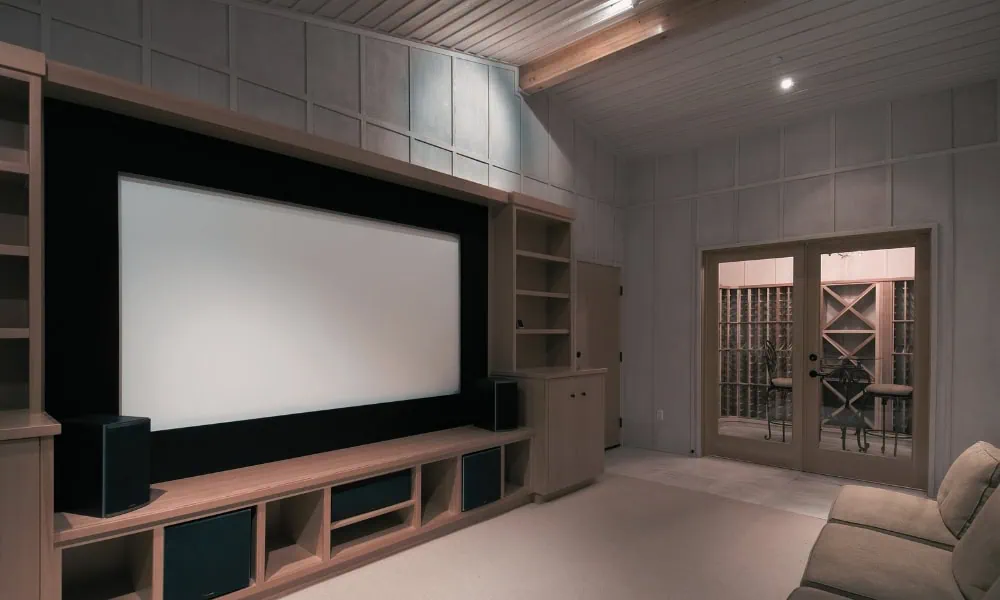
Having natural or artificial light shining directly on the screen can create glare, wash out images, and reduce contrast, especially if you are using TVs with high dynamic range capabilities.
For this reason, ensure to cover the lights coming from the windows with curtains or blinds or place them away from the screen.
You can install wall sconces to create ambient light not beaming directly on the screen. Or, you can also use downlights or recessed lighting on dimmers to prevent the beams from pointing on the screen.
2. Use dimmable lights.
Dimmable lights are bulbs that you can adjust or control. You can adjust the brightness of these lights to do other activities or set a cozy ambiance for your movie time.
You can have different brightness levels when playing games or having a conversation.
Lowering the light intensity will reduce glare and reflections on the screen, making it more friendly to the eyes and improving the picture quality.
3. Incorporate bias lighting.
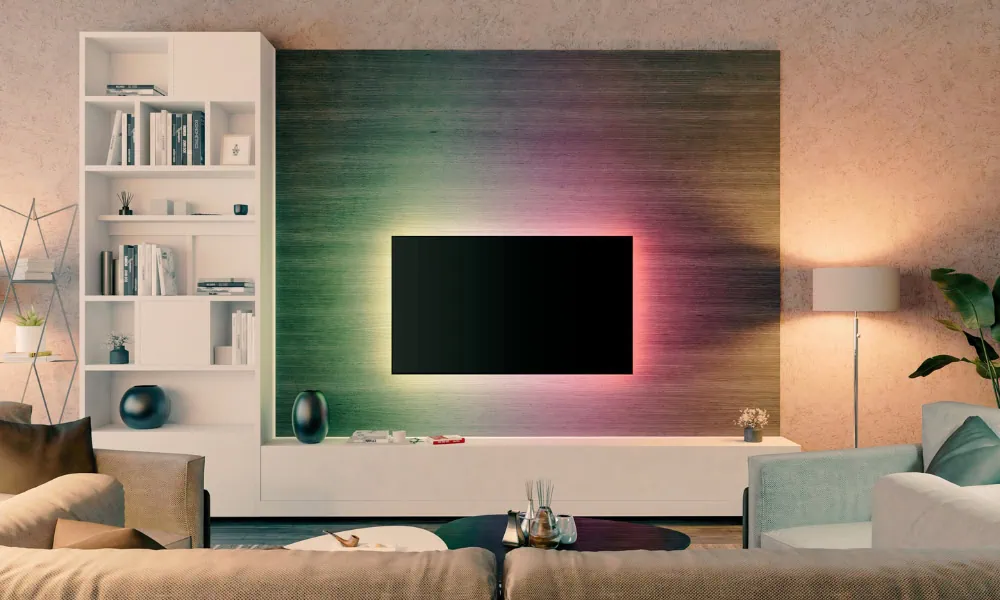
Bias lighting is a practice where a backlight is placed beneath the screen, creating a halo-like effect around the screen.
The backlight balances the darkness of the room and the brightness of the screen, reducing eye strain and creating a more comfortable watching experience.
If you watch TV or play games over extended periods, you should use this technique to protect your eyes.
4. Use indirect lighting as much as possible.
Indirect lighting is a technique where the light bulbs are not visible. It is often hidden beneath architectural elements like moldings, coves, or furniture.
In this technique, the light reflects off the surface, producing soft and even lighting.
Indirect lighting minimizes glare and reflections, creates a softer and cozier ambiance, reduces eye glare, and enhances focus on the screen.
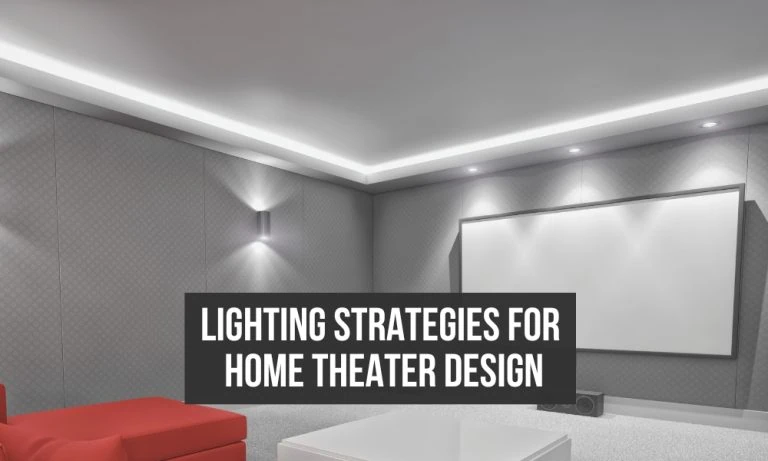
You can use cove lighting, wall washers, backlighting, wall sconces, LED strip lights, and floor lamps to create indirect light in your home theater area.
5. Create a balanced environment.
A balanced home theater lighting setup happens when you use different lighting strategies effectively. In this setup, the lights are not too dim or too bright.
The lighting is comfortable and immersive, just right for the scenes you are watching.
The setup enhances the room’s ambiance, and you can view without distractions due to lighting.
In this practice, you strategically use the three main types of lighting: task, ambient, and accent lighting together efficiently.
a. Ambient lighting
Ambient lighting is the universal lighting that illuminates the background of the entire room. It is the base layer of room lighting.
Examples of ambient lighting are ceiling lights, recessed lights, cove lighting, floor, and table lamps.
b. Task lighting
Task lighting is a technique used to illuminate a particular area or activity without distracting the ambiance.
For example, an LED strip specifically placed on a step or pathway to light up that area for walking.
Or, a light placed near the remote control holder or console control.
c. Accent lighting
Accent lighting plays a crucial role in the overall aesthetics of the room by illuminating specific elements like a portrait or wood art hanging on the wall.
For example, ceiling lights directly pointing at the walls create a wash effect.
By using these lighting techniques strategically, you can create a balanced environment that is eye-friendly, aesthetic, comfortable, and cozy.
6. Consider smart lighting control systems.
Smart lighting allows you to control and automate the lighting in your home entertainment room without leaving your seat.
It is a network of smart bulbs that can be connected through an app or a smart control accessory.
You can control it with your own gadget or voice assistant.
Aside from its dimmable features, you can also change the colors of these bulbs, allowing you to set the mood for different scenes.
You can also set the lighting to a different mode. In movie mode, the smart bulbs are dimmed with a soft glow.
If you set them into cleaning mode, the bulbs light up bright and evenly. You can also set it to party mode where the lights glow with various bright party colors.
7. Choose the right cinema lights.
The right cinema lights will define your entire home theater room. When choosing the appropriate lights, you must consider the room layout and screen position. Choose those that have dimmable and smart features.
Here are the cinema lights you can choose from:
Recessed downlights. To provide general illumination and keep the beams away from the screen.
Wall sconces. For providing ambient light without illuminating the screen directly and directing the lights upward or downward.
Cove lighting. To create a soft and indirect glow, enhance the cinematic vibes, and balance light levels without affecting the image details projected on the screen.
Step or pathway lights. To provide subtle illumination across stairs, pathways, or tiered seatings.
LED backlights. To create bias lighting beneath the screen.
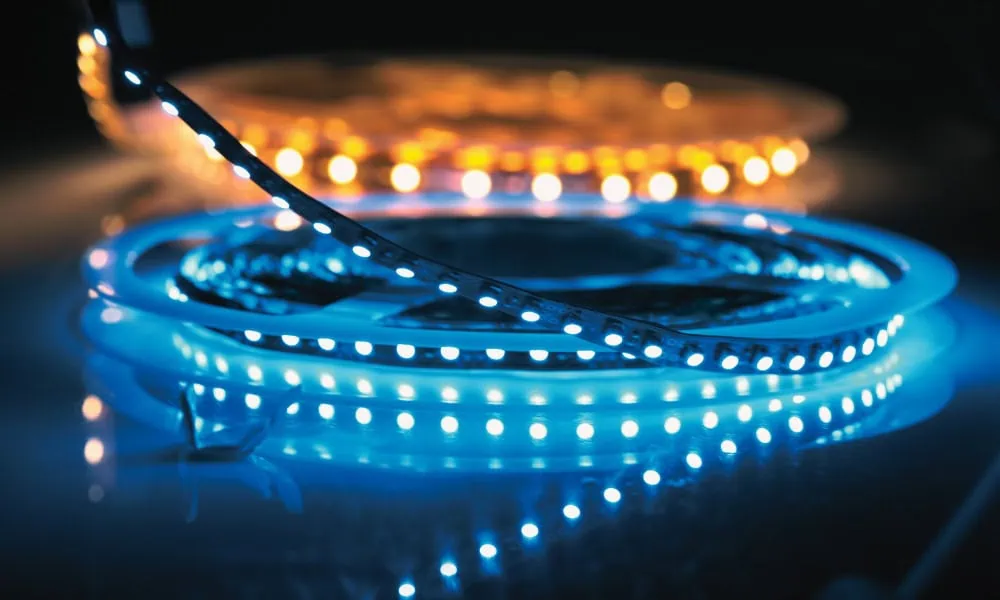
Smart RGC LED strip lights. For a more customizable experience where you can change light colors and brightness levels.
Floor uplights. To accentuate decors and architectural elements, create dramatic effects, and add depth.
8. Avoid glare.
Glare reduces picture quality and impacts your overall experience and comfort.
To avoid glare, avoid using reflective surfaces that may bounce light onto the screen. So position the lights strategically.
Use dark and matte paint for the wall to reduce reflection. Blackout curtains are also ideal to eliminate natural light from the windows.
Lights with diffusers or shades are effective tools to spread and soften light evenly and reduce harsh reflections.
Transform your space with the best home theater lighting practices
The perfect home entertainment lighting setup doesn’t just go beyond getting a smart projector or installing lights. It’s about understanding the impact of each lighting strategy and using the best practices to apply them.
When applied strategically, you can transform an ordinary basement or any room into a movie haven that glows subtly and immerses in any scene.
From minimizing natural light to choosing the right cinema lights, each practice contributes to enhancing your experience, boosting picture quality, and being gentle to your eyes.
The combination of ambient, task, and accent lights turns any room into an immersive entertainment space. And no matter what you do, whether watching movies, playing games, or simply unwinding, you can balance your environment like a pro with these practices for home theater lighting setup.