
Last Updated on April 18, 2026 by Johann Holsinger
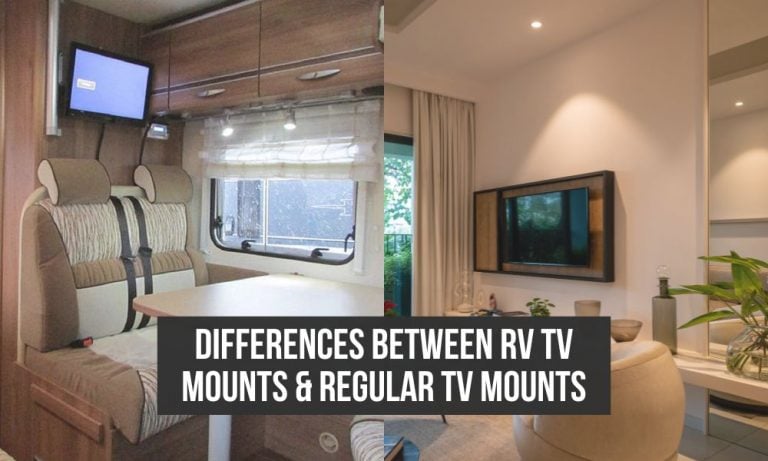
What are the differences between RV TV mounts and regular TV mounts?
A lot of campers and RVers living or traveling like a boss in their motorhomes mistake a regular TV mount for inside the RV when wanting to watch a romantic movie in the depths of foreign and remote areas of the jungle.
Sometimes, when you become too overwhelmed with purchasing helpful gadgets that you need for your motorhome, you tend to overlook a necessary step before setting up your RV entertainment system, and that is your research.
So when you buy a mount for your camper TV, you can easily find one on the internet, not knowing the difference between an RV TV mount and a regular TV mount.
Good thing we summarized all the information you need to differentiate them.
If you are still asking, ” Are there any differences between RV TV mounts and regular TV mounts?”, carry on.

Why Can You Not Use a Regular TV Mount on an RV?
Before we get into the details, let us make it clear that an RV TV bracket is not for camper televisions for no reason.
Although an RV TV and a regular mount seem the same, they are mounts with specific functions and different safety features.
A regular television bracket is not designed to work in a moving environment but for a stable location at home.
Your TV mount will need to be stable while installed while remaining level so that she can take the vibrations of a moving vehicle without a fuss.
Using a regular monitor bracket not only risks your television from falling off but also could cause blurred vision, damaged electronics, or power outages and surges.
For this reason, RV TVs will need dedicated engineering for a TV mount that can take shaking and vibrations.
This feature should keep the television secured in the bracket in the event of sudden stops, or bumps in the road, or help with flying debris in the occurrence of an accident.
Your TV needs a safety belt too!

Additionally, a regular bracket may come so loose that your monitor may protrude from the wall too long or too much to support the TV’s weight while the vehicle is moving.
Even if you know the weight rating of a regular TV mount, this may not work for a moving environment with an extra lateral and vertical load.
To help you understand the other differences between the two, let us compare.
What are the types available?
For RV TV mounts
RV TV mount types are designed to fit the RV walls or ceiling.
And take up as little space as possible and can easily be tucked out of sight because of their limited space. Here are the types of RV TV mounts:

1. Full-motion RV TV mounts
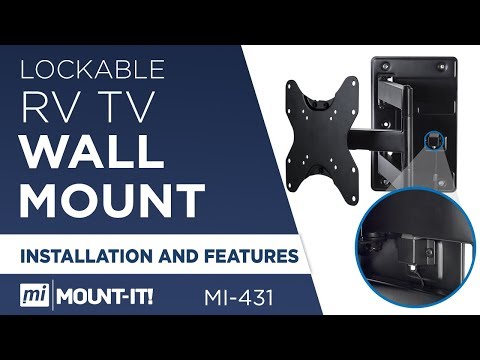
The extendable articulating version is like a regular long-arm TV mount nut for an RV or camper. Just like the full-motion TV mount for home, the unit can swivel, tilt, extend, and retract.
The hardware allows viewers to watch at the desired angle but with added features. Full-motion RV TV mounts have a locking mechanism that secures the monitor in its place in the event of sudden stops and vibrations when the vehicle moves.
Also, since it is extending, the mounts for RV TVs use a high-strength fastening system and tensioning mechanism that keeps the television extra stable.
2. Fixed RV TV mounts
Have a simple mechanism of a wall and a bracket that holds a flat-screen TV securely.
By sliding the bracket into the wall plate, it locks securely into place.
Special screws secure the plate into the wall to withstand the vibration and movement inside a camper van.
Also, expect a minimalistic design uniquely enabling the mount to fit the shape of the RV wall.
3. Flip-down RV TV mounts
These RV mounts are mostly bolted up into the ceilings or under cabinets.
This type of camper TV mount features low-profile mounting with swiveling arms that fold your mount up to hide the TV.
This mount is a popular television mount for RVs because of its sturdy construction and the specialized mechanism that provides ease of use.
4. Slide-out RV TV mounts
These TV mounts have a rugged construction with telescoping arms that allow the mount to slide out and retract back into the wall.
With heavy-duty engineering, this arm could hold the TV securely even with the demanding moving environment.

For regular TV mounts
Regular television mounts have a more specialized mounting that works for specified locations. Check this round-up of TV mount types.
1. Full-motion regular TV mounts
The most popular TV mounts for home look the same as RV TV full-motion TV mounts to most.
However, a full-motion television bracket used at home does not require the security and stability pin to lock the unit in place that is needed in the construction of an RV full-motion TV mount. Home mounts also extend longer, swivel, tilt, and fold back to the wall more dynamically.

2. Fixed regular TV mounts
These TV mounts are for home use and may need multiple stud mounting, while RV fixed mounts bolt into single studs generally. Some of them tilt, taking more space compared to fixed RV TV mounts.
3. Pull-down TV mounts
These mounts are specialized articulating mounts that you can pull from above a fireplace mantel for a more comfortable viewing angle.
4. Corner TV mounts
These mounts are brackets specifically engineered for corner TV mounting.
Boasting two bases that you can bolt into each separate wall from inside the depth of the hiding corner, the hardware can also extend, swivel, tilt, and retract from the wall surface.
5. TV stands
This is a type of TV mount you cannot set up for an RV TV since the vehicle will be moving on the road.
TV stands can either be bolted on the floor or on a tabletop, however. Another type of floor stand is portable to bring your junk outdoors.
Check this round-up of TV mount types.
Applications
RV TV mounts usage
Even if you live in a motorhome, you can enjoy having home entertainment just like a flat-screen television in a normal home or apartment.
You can mount your television with all the flexibility found in your RV.
Maximize your space or hide your monitor discreetly with a simple push.
Hide that one up on the ceiling with a flip-down RV mount.
From your dinette to your living room, you can mount it in between with an articulating camper van TV mount and still switch viewing angles.
Inside your RV, you can fit your television flush into the wall, under the cabinet, or in your bedroom, and you can have more space to move around.
Also, you can set up an outdoor patio and mount your television from different spots on the outside walls of your motorhome.
The most common spot is on the side of the RV by the main door. Some owners place their TVs at the back and the entrance.
You can install a clip on the outside of your camper and on the TV and manually lift the monitor inside and outside your RV when needed.

Regular TV mounts usage
Most regular television mount types can only be used for their specific design locations.
For example, you cannot use a corner TV mount for the center of the living room wall or under the kitchen cabinet. A pull-down bracket is much more applicable above the fireplace.
A ceiling TV bracket cannot be mounted on the wall. Some mounts with lift mechanisms can either be hidden on a cabinet, on the wall, or ceiling – depending on your customization efforts.
For this reason, regular mounts have limited applications except for full-motion extendable mounts.
You can adjust a monitor in different locations and still get a better view, except for the ceiling.

Comparing movements
When it comes to movement, expect to have a bigger range for regular TV mounts.
RV TV mounts movement
RV TV mounts are designed to fit into smaller spaces.
Compared to regular mounts, our database shows that the swiveling arms of an articulating camper television brackets can extend from 12.83 inches to 18.4 inches.
RV TV mounts can only tilt upward by 5°and downward by -15°.
For fixed RV mounts, we still find ones from Mount-It! that can tilt upward by 5°and downward by -15°. Though the movements seem small, this range is just enough in an RV setup
Movement options for regular TV mounts
With so many types of regular TV mounts, and if the space is not so limiting, they have a bigger range of movements.
Although the tilting motion can be the same with RV TV mounts, the pivoting arm of regular full-motion TV mounts has much more range.
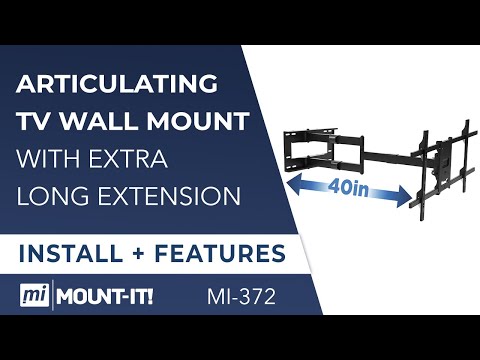
The longest pivoting arm we found on our database can extend up to 47 inches.
And these arms could swivel by 90° on both sides. We also found ones that can make full swivels of 180° left and right.
Standing TV mounts have adjustable heights, and their backsides can swivel.
You can adjust floor stands up to 56 inches and swivel by 25° on both sides.
Although the numbers look larger than RV TV mounts, these measurements provide greater flexibility for a home because there is more space than in an RV, and viewers have a greater distance from the screen.
Security, Stability, and Ruggedness
I have no doubt that RV TV mounts are built for stability, safety, and ruggedness. But it doesn’t mean regular brackets don’t share security features applicable for home use. Read on to know them.
In RV TV mounts
One of the unique security features of camper TV brackets is the lockable mechanism that reduces possible damage from the continuous movement of the vehicle.
This design helps the spring latch stop from rattling by pulling the strap.
By pulling the strap, the pivoting arm folds into position to avoid the impacts of shaking and vibration. In reverse, you can also pull another notch for a quick release.
Also, these mounts are equipped with tamper-resistant screws to prevent easy unwanted theft.
Although theft in RVs can be uncommon, the vehicle is still prone to theft in dangerous locations, especially in RV parks.
The screws used on these mounts have a unique driver that regular screwdrivers cannot remove.

In regular TV mounts
Regular TV mounts also have security features applicable for home mounting.
They can also have anti-theft features such as a locking bar that needs a padlock, a lock and key system, anti-theft security screws, spot anchors, or cable locks that help the monitor securely fasten into the wall mount.
Another known safety feature for regular TV mounts is the anti-slip strap used mostly for television stands.
These straps prevent the TV from slipping from the floor or table.

Installation Required
When installing TV mounts between RVs and traditional homes, they share different levels of complexity and difficulty, but the procedure and tools needed are the same.
For RV TV mounts
Installing your TV mount on your RV is not much different from doing it in traditional homes.
However, the tricky part comes with finding the right location! As you have to be careful not to drill into wires, plumbing, or structural elements of the frame.
Good thing, RVs come with dedicated spots to mount. You just have to find the spot in the back. Ensure you have a stud finder before drilling out your pilot holes.
Also, another tricky part during installation is routing your cables and keeping them tidy.
Ensure enough space for your mount to extend, swivel, or tilt, especially if you are using a full-motion RV TV mount.
When installing regular TV mounts
Regular TV mounts have the same procedure and tools needed for installation on an RV, however, with extra precautions.
You have to carefully height your TV. Also, consider your wall type to decide which fixing hardware to use. Installation fixings differ with concrete and drywall.
Using incorrect fixing can result in unsecured installation and future stability issues [1].
Also, you need to consider stud spacing and cable management which may be more complex than installing in a motorhome. Here’s a more detailed guide on TV mount installation at home.
TV size and weight capacity
RV televisions are usually lighter than regular TVs. This is because RV TVs are smaller in size than most RVs.
RV TV mount measurements
The largest monitor size we found in our database that RV TV mounts can accommodate is 55 inches.
Most VESA mounting patterns for RV televisions are 75 x 75 mm to 200 x 200 mm. For this reason, these brackets may take TV loads of 22 lbs to 77 lbs.
Regular TV mounts measurements
Depending on their rating, the sizes start at 26 inches as the smallest. At the same time, heavy-duty mounts can take 100-inch TVs.
The largest regular mounts can take mounting holes of 200 x 200 mm to 600 x 900 mm in size.
For this reason, the load capacity of regular TV mounts starts at 66 lbs, and the heaviest-duty mount can take a full load of 220 lbs

Space Required
For RV TV mounts
Articulating RV mounts usually have a single-stud base, which should fit within your wall studs.
However, you need space for the extension and swiveling motion of the pivoting arms.
The common extending length is about 14.5 inches or 15.7 inches. Depending on the model, provide a space where it can move around.
The same goes if you install a slide-out or flip-down TV mount. Also, do not forget to add the size of your monitor.

For Regular TV mounts
Regular TV mounts have much more space to offer than RVs. Depending on your location, you can allot more space for extension.
The only limiting home television bracket could be a pop-up TV. You need to attach the base to a cabinet that can fit the lifting height.
Another space-limiting TV type is the under-cabinet TV mount. You have to allow a good amount of space for flipping the TV down.

Cable Management
When it comes to cable management, both RV and regular TV mounts share their complexity. You need to plan cable management carefully, especially when routing the cables through the walls or in ceiling spaces.
Different brackets may have respective cable management systems, while some models may require separate purchases of cable organizers.
Like wall tracks or customizable outlet boxes.
Cable management for RV TV mounts
Cable management for an RV TV is especially complicated. Because of the limited space in the walls, you need to route your cables carefully, as they can easily get tangled inside the walls and become a safety hazard.
Good thing some mounts have built-in cable management features such as cable clips and trays. You can organize your TV cables better than dangling cords lose.

Cable management for regular TV mounts
Some TV mounts and stands have built-in cable management tubes where you can hide cables inside the mount itself.
Some TV mounts come with clips, ties, and a built-in cable router.
The problem now comes with how you will manage those cables once they go out of the mount.
More homeowners prefer neat cable routing through in-wall cable management. Other homeowners prefer using cable raceways or channels and organizers.

Final Thoughts
Holidays would be impractical to conclude which mount is best as both types are designed for their functionality.
A television mount for RVs and regular brackets for homes.
While they may look the same to some, they share differences and different parts. And these differences come with security, safety, and stability features.
Brackets could have a similar appearance, but an RV TV mount has integrity built for the rugged movement of a vehicle. For regular ones at home, their installation location is more stable. You only have to care for the wall type, fixings, and mounting height.
So if you are looking for an RV TV bracket, make sure you are browsing mounts specifically for RVs. Or, you can simply check our shortlist of – our most recommended TV mounts for RVs.
More information:
- How to install your TV and prevent it from falling, https://www.lifewire.com/tv-installation-safety-1847852