- Worried about how to make your home entertainment setup last?
- 1. Plan future upgrades.
- 2. Purchase a future-proof TV or projector.
- 3. Non-smart TVs and projectors offer more flexibility.
- 4. Know what really matters.
- 5. Invest in a surround sound speaker system.
- 6. Run cables and wires.
- 7. Protect your AV components.
- We cannot stop technology from evolving.

Last Updated on April 20, 2026 by Johann Holsinger
Worried about how to make your home entertainment setup last?
In the past two decades, we have seen how technology has transformed our entertainment experience and lifestyle.
From bulky monitors to slimmer TVs, people have switched from watching movies on wide screens to watching them on mobile screens.
We have also seen how fast-paced technology is advancing, and tech companies continue to race for new technologies to offer.
And admit it, consumers today tend to be impulsive to get the latest advancements once they see it in the news or timeline.
When we want to purchase something big, we must ensure that we will purchase and build something that will last.
Investing in a home entertainment system is no joke.
It’s not a simple plug-and-play system that you can expect to run smoothly in the next ten years.
So, you have to carry out a plan that will future-proof your investments today.
1. Plan future upgrades.
I understand that investing in home entertainment doesn’t always come in one go.
In most cases, you’ll have to purchase one component at a time. Some consumers tend to buy on impulse.
And that’s what we want to avoid. Because these types of purchases often lead to discarded components.
I know. Not all of us have technical knowledge of AV equipment.
So, if you are planning a dreamy media room or home theater setup, you must start at one point.

How do you want your home entertainment system to be?
Do you want to turn your basement into a cinema room?
Do you prefer an extra large TV screen?
Should you get a smart TV or a smart projector?
Do you want wireless or wired systems?
Do you want to upgrade your sound system in the future?
When you have a clearer picture of your dream home entertainment, everything on your list follows.

2. Purchase a future-proof TV or projector.
TVs are ever-changing today. From applications to physical features, finding the right television that will last for the next ten years will be a challenge.
A 4K resolution smart TV is a wise investment.
Theaters have shown 4K resolution motion pictures since 2011, and Sony sold 4K resolution projectors in 2004. Imagine how it took 20 years to reach home entertainment setups.
Even though 1080p screens are still a good investment and will produce high-definition graphics today, a 4K resolution monitor will still be relevant until your television reaches its lifespan of up to 16 years. Not many producers made movies in 4K UHD, even until 2023.
If you have no idea, 4K resolution is four times the number of pixels as 1080p, resulting in a much sharper image.
This is especially noticeable on large screens, where the pixels are more visible. 4K TVs are also becoming more affordable, making them a more viable option for consumers.

If you are looking for a television that will provide you with the best possible viewing experience, a 4K resolution smart TV is a good choice.
For projectors, you don’t have to spend much on 4k still. A 720p standard high-definition does not have much difference with 1080p, especially for personal or family use.
You can still watch with crisp and sharp images at 720p, even on a larger screen.
Unless you intend to immerse into the movies you are watching or games that you are playing, a 1080p smart projector that can support 4K UHD will be your wisest investment at present.
If I had to choose between smart TVs and projectors, I find smart TVs more economical and future-proof at the same time.

3. Non-smart TVs and projectors offer more flexibility.
The problem with smart TVs is– they are often tied up with the technology of their brand and offer limited flexibility.
Another risk of using smart TVs is security. For this reason, it is better to use an external streaming device to source video and movie content.
You do not have to worry about your television not adapting to new technology or updates. You can connect your laptop to a monitor or setup box with upgradeable systems. You can even mirror the movies from your mobile streaming apps to your telly.
With smart applications coming up easily, there’s a higher chance that your current version of smart television will not be able to adapt to new software releases in the next ten years.
However, non-smart TVs with 4k solutions are harder to find these days. If you want to future-proof your television, find a 4k non-smart TV with the necessary ports.
If this is your choice, you may need a receiver for audio upgrades.

4. Know what really matters.
Since we are talking about ports, here are the must-have ports for a future-proof TV, projector, or streaming device.
HDMI 2.1
HDMI is your most important transmission cable today. It carries data from high-definition audio and videos.
You can connect your TV to a computer, different media streaming platforms, and gadgets through an HDMI. And it’s not going away soon.
While HDMI 2.0 can transmit data of up to 18 Gbps, HDMI 2.1 performs better and will still be relevant in the next ten years.
The latter can transmit 10k resolution at 120Hz and up to 48 Gbps of bandwidth. Although this version is more useful for PS5 and Xbox Series 5, it pays to prepare your home entertainment.

Bluetooth
Bluetooth is the key to going wireless. Bluetooth connects different components of a home entertainment system.
You can choose speakers or devices that have built-in Bluetooth connections or ports to receive Bluetooth signals using receivers.
The latest Bluetooth release is version 5.3. However, Bluetooth 5.0 is enough to future-proof your present devices.

USB
USB first came out in 1996. Many AV devices are still equipped with the earlier versions of USB and are not going away soon.
But since you want to future-proof your device, make sure you have USB 3 and USB C ports in your devices.
Ethernet
Hard-wired internet never dies. It increases speed, stability, and security.
Even with the emergence of wireless-enabled devices, I still rely on my ethernet cable for high-speed transmission of internet connection.
Nobody wants to watch lagging videos and movies.
If you want to future-proof your home entertainment system, route for ethernet and HDMI cables.
While the latest ethernet Cat8 cables support up to 48 Gbps, Cat6A can run at 10 Gbps and is designed for future-proof speeds at longer distances. A Cat6A can handle the volume of data required to play HD movies.

5. Invest in a surround sound speaker system.
Speakers are legends and will not be replaced in any way in home entertainment. Speakers built fifteen years ago remain functional today unless damaged.
With many surround sound systems you can choose from, a 5.1 surround sound speaker system is your safest choice to future-proof your entertainment system at home. It consists of:
- A front-center speaker
- A front left speaker
- A front right speaker
- A left surround speaker
- A right surround speaker
- A subwoofer

While you can do away with a 2.1 soundbar for bedroom use, there’s nothing like having the right sounds thrown from the right places in the right directions.
If you are setting up a home entertainment for personal consumption, some soundbars support 5.1 surround sound.
However, the latter still does not match the performance of a true surround speaker system.
For future upgrades, adaptability to immersive audio formats, system expansion, and easier room integration, a 5.1 surround sound is your safest choice. This system is enough to support Dolby and DTS audio formats.
Check this out to explore more about soundbar and home theater speaker differences.
6. Run cables and wires.
A home entertainment system is a network of audio-visual equipment that requires planning.
To future-proof your home, you need an intelligent wiring network that can manage connections, cables, utilities, smart appliances, garages, and security equipment.
This measure will protect your home entertainment from future advancements and upgrades.
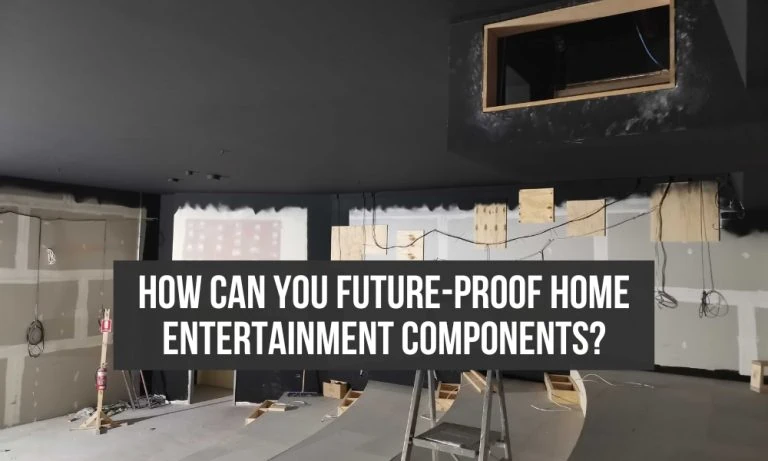
Identify the cables that will run behind your home entertainment. Run conduit for your home theater and add more wires. You will run HDMI, ethernet, speaker cables, power cords, and USB cables.
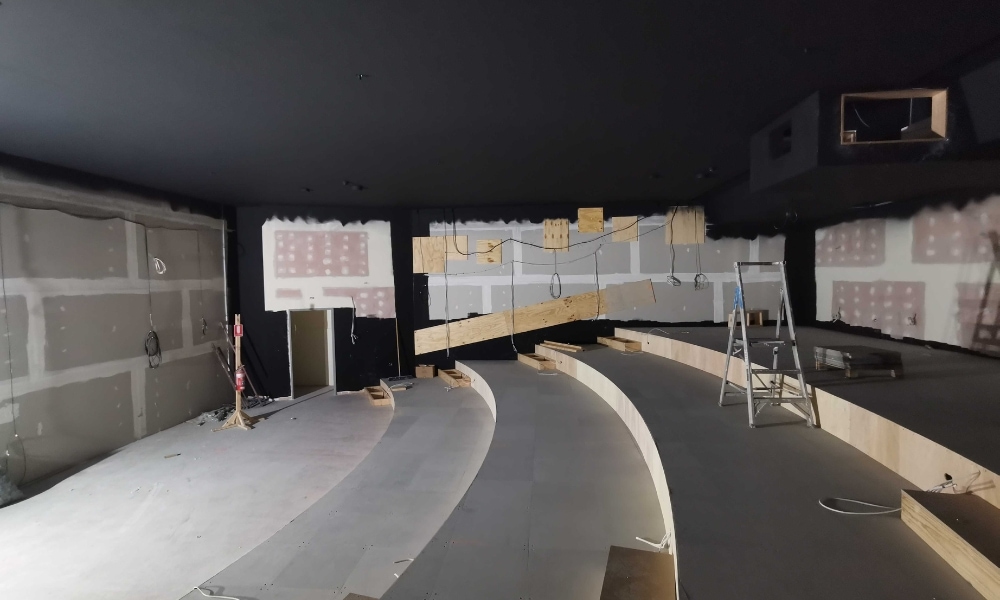
If you are presently buying a 5.1 surround sound, wire for a 7.1 or 9.1 setup. Ensure that electrical wires and cables run clean near or behind your TV, and console table.
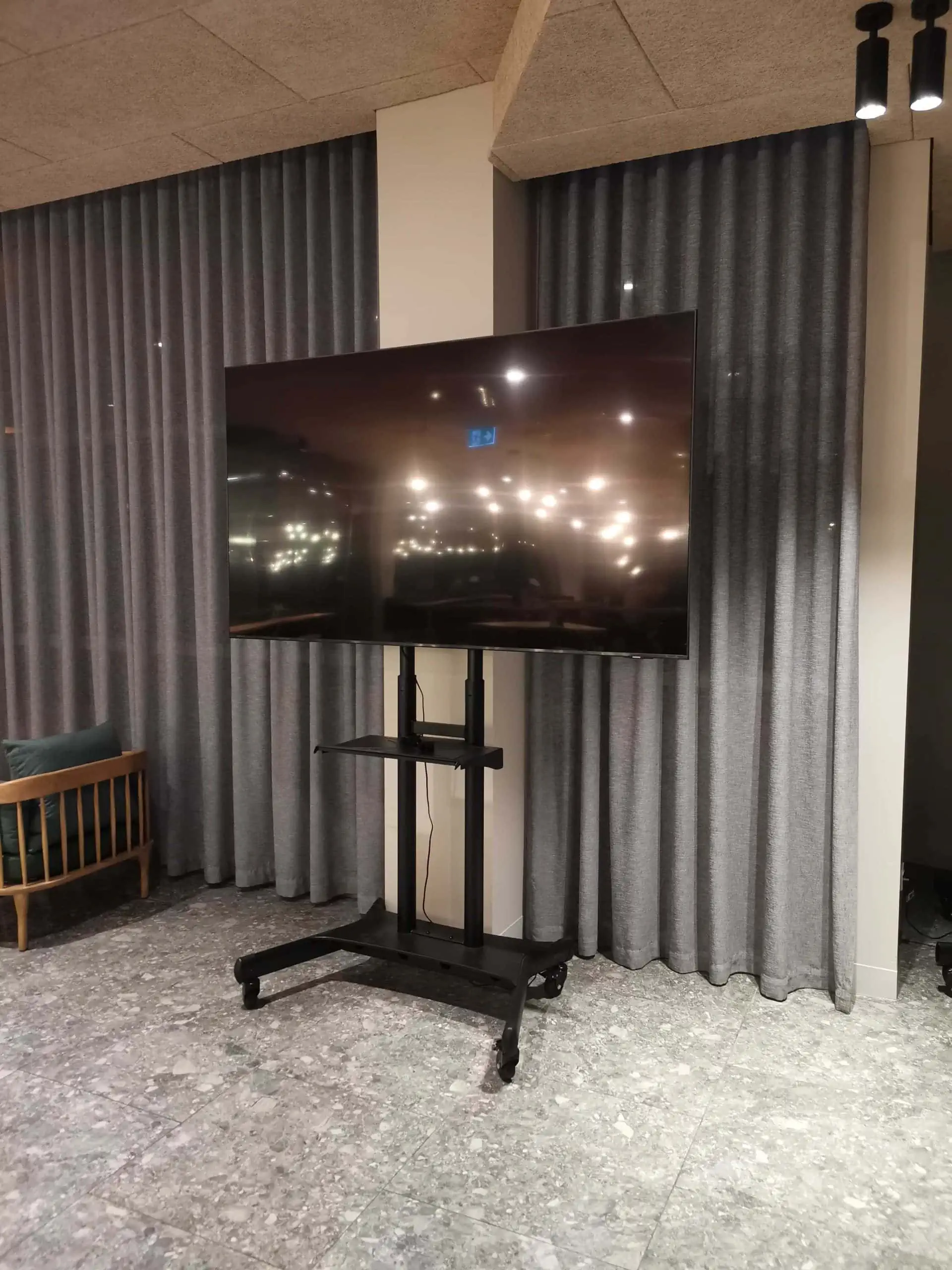
A fixed floor TV stand is also a good way to manage a simple home TV setup without drilling holes.
By investing in premium wiring materials and components, the transmission of sound, visuals, or information becomes seamless and at faster speeds.
You save money for future and frequent re-wiring costs. Also, you are likely to adapt and switch faster if you decide to upgrade your home with innovative technology.
7. Protect your AV components.
The last thing you want is to have your newly purchased AV device blown because of electricity spikes.
From TVs to streaming devices, these components contain sensitive parts that can cause partial or complete damage.
I remember blowing up my laptop because of the sudden surge when I plugged the charger in.
When the technician opened my laptop, there were burnt components inside.
I was unable to use my laptop until he changed the motherboard. It was so costly. Good thing it was still covered by warranty.
Most AV devices have one to five years warranty depending on the affected part. But what if the device is already out of warranty coverage?
To avoid this, invest in surge protectors to protect your AV components and extend their lifespan.

We cannot stop technology from evolving.
However, we can protect our present investments in home entertainment technology for future use.
We only need to know the best practices to make our investments last.
By being wise in our current purchases and installations, we can ensure that our home entertainment system can keep up with future upgrades.
This includes investing in high-quality components, thoughtful wiring solutions, and surge protection.