

Last Updated on December 3, 2025 by Johann Holsinger
Are you ready to bring the cinema experience home?
Feel the rumble from helicopters and soldiers firing guns in breathtaking aerial scenes?
Hold your breath to heart-stopping footsteps on the hollow floor and creaking doors of your favorite horror movie?
I bet you are so excited to transform your room into a movie haven where you can escape to different worlds every day and forget about your boss calling every fifteen minutes and the sound of your keyboard clacking.
But not so fast! Before you get lost in anything else, you’ve got to ensure that no one knocks on your doorstep to tell you they cannot sleep because your movie is too loud.
So, in this guide, we’ll teach you how to isolate the sound from your home cinema.

How does sound travel in a home cinema?
In most cases, sound travels by air. Those sounds coming from your soundbars or surround speakers travel as airborne sounds.
When sound hits an object or a wall, the surface can bounce the sound waves off, absorb it, or let it pass through.
Sounds with higher frequencies dissipate when they touch the wall, while those with lower frequencies may pass through them.
While it passes through, the drywall may vibrate as the rumbling continues.
This reaction explains why your wall vibrates when your subwoofer shoots bass frequencies from scenes like engines revving or thunder sounds.
However, there are also sounds produced as structure-borne.
Sounds created by physical impacts are structure-borne sounds. These sounds may include clapping hands, stomping feet, or ball dribbling.
As these sounds travel through the wall, the drywall vibrates along with other structures connected to it. This process has no barrier.

Soundproofing as a solution
When we own a home entertainment system, regardless if it consists of only two speakers, there’s a high probability that the sounds produced by these speakers will travel and be heard in the next room.
For this reason, you need to soundproof the room if you are creating a disturbance.
Soundproofing is a solution that allows you to control and isolate the sound coming from your home cinema. This measure is one way to keep the sound only in your room without bothering your family or housemates.
You may have to block, install, or add soundproofing materials into various structures in your home cinema room, like the walls, windows, or doors.
I recommend soundproofing the home cinema during construction while routing wires for home theater components since the wall is bare, and you may stuff insulation and soundproofing materials into the gaps.
Although, you can still soundproof an already-constructed home cinema.
To make this possible, you must understand the STC ratings given to different soundproofing materials.

Understanding STC ratings
STC or sound transmission class is a rating measured for soundproofing materials to determine how much sound can pass through them.
Imagine our home cinemas could throw around 100 decibels to another room when our drywall can absorb the sounds of 40 decibels.
Even budget soundbars can produce over 100 decibels of sound. If this is only your wall structure, around 50 decibels will still pass through the drywall.
For this reason, we stuff our walls with soundproofing materials to reduce the impact of the sounds from our home cinema to surrounding bedrooms.
The good thing is the International Building Code assigned a minimum of STC 50 for new properties.
To give you an idea, you may hear the words spoken from the other room with an STC 20-rated material.
Materials of 50 to 60 STC can barely transfer audible sound, even if the music from your cinema is loud. For home cinema, choose soundproofing material of 55 and up.

Where should you soundproof in your home cinema?
You must soundproof any openings in the home theater room where sound can travel. That includes:
- Windows
- Doors
- Walls
- Floor
- Lights and ceilings
Ways to soundproof home cinema
There are four basic ways to soundproof your home cinema. You can add mass from heavy and dense materials to help absorb the sound.
Or you can damp soundproofing material, which stops sound transmission.
Some other materials prevent sound transmission and vibration of sound to connected parts of the house.

Method 1 Insulate your walls and ceilings.
Insulation is the process of stuffing the space between the walls of the adjoining room with heavy and dense material.
With this structure, the air gaps act as barriers that block sound transmission and limit sound movements until the sound weakens before it reaches the other room. Otherwise, hollow wall cavities can act as a drum.
With an already constructed home theater room, you should remove the drywall to add the insulation materials inside. From there, replace the removed drywall with a new one.
Insulation materials for soundproofing:
- Loosely packed fibers
- Fiberglass
- Open spray foam
- Mineral wool

Method 2 Decoupling
Decoupling is a soundproofing method that separates the two wall panels to prevent sound travel.
Remember the structure-borne sound passes the vibration to the connected part of the wall, the stud, allowing sound to travel to the other room.
Decoupling minimizes or eliminates this connection, so the vibration reduces impact or stops.
For example, a staggered or decoupled stud wall will have its own stud on each side, which has no connection to the other wall. In this case, there is no conduit for the vibration to pass on the other wall lining.
Aside from a staggered wall, you may also create a double-stud wall, and use isolation clips and resilient channels, and add more insulation to make your wall completely soundproof.
You can also use this method to isolate your ceiling joists, especially if there is another room above your home theater room. The same principle of decoupling also applies to this method.
You must install new joists and isolate them as much as you would on wall studs. This method will help reduce the vibrations or sounds passed in the room above.
Moreover, you can also insulate the space between the floor and ceiling to improve soundproofing. This method works, especially if you have installed speakers on the ceiling.
An effective finishing touch to your decoupled walls and ceiling is installing acoustic panels.
Method 3 Install acoustic wall and ceiling panels.
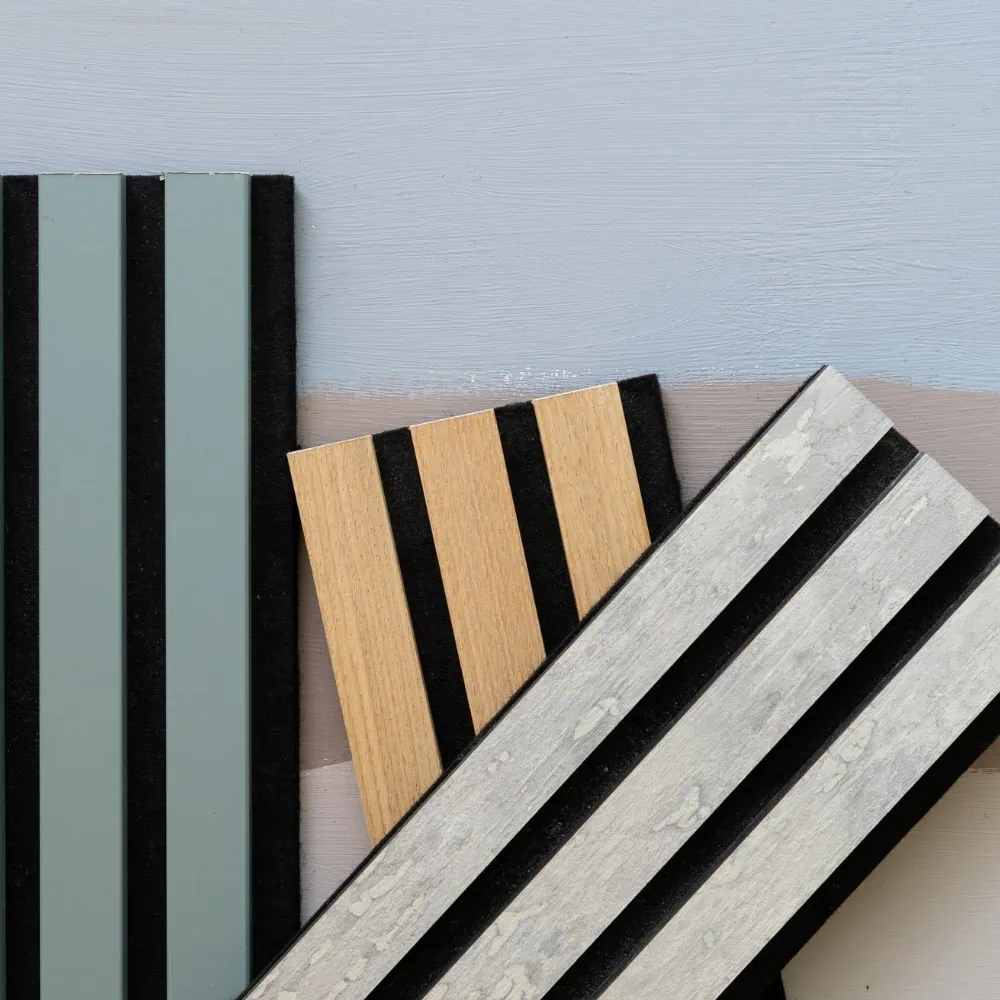
If you convert a room into a home theater and do not want to pry off the drywall, you may install wall acoustic panels instead.
Usually made from polyester, these specialized materials are hung to absorb sound waves.
It doesn’t necessarily soundproof the home cinema room, but it will help absorb and control the sounds produced by your speakers.
The problem with DIY home theaters is room acoustics are often overlooked. The sounds create a myriad of soundproofing issues like fluttering echoes, bass build-up, and standing waves.
Before my clients came up to me, most of them had reflective hard walls producing problematic soundwaves, affecting the sharpness of sounds from their AV equipment and ruining their entire home theater experience.
To minimize this, I placed the acoustic panels strategically in ideal spots to absorb frequencies, control them, and improve their sound.
But to do this, you have to design your home theater properly. Find the first reflection points in the walls and ceilings.
The first reflection points are the points where sound waves first bounce off. For example, in the case of your front, center, and left speakers, you must place acoustic panels on the front walls evenly.
Aside from the front walls, the side walls are critical points where soundwaves bounce off. To find the first reflection point on the wall, sit down from where you usually watch TV.
Ask a friend to hold a mirror and let her move across the wall. If your friend moves to the right, let him move until you see the right speaker in the mirror.
That is your first reflection point. If your friend moves to the left, let him move until you can see the reflection on the left speaker.
The rear walls will likely take low-frequency sounds and late reflections. I advise to spread acoustic panels to reduce reverberations on the rear.
If you have the budget, placing acoustic panels on the entire wall and ceilings will improve and absorb sound.
Method 4 Add mass-loaded barriers to your walls.
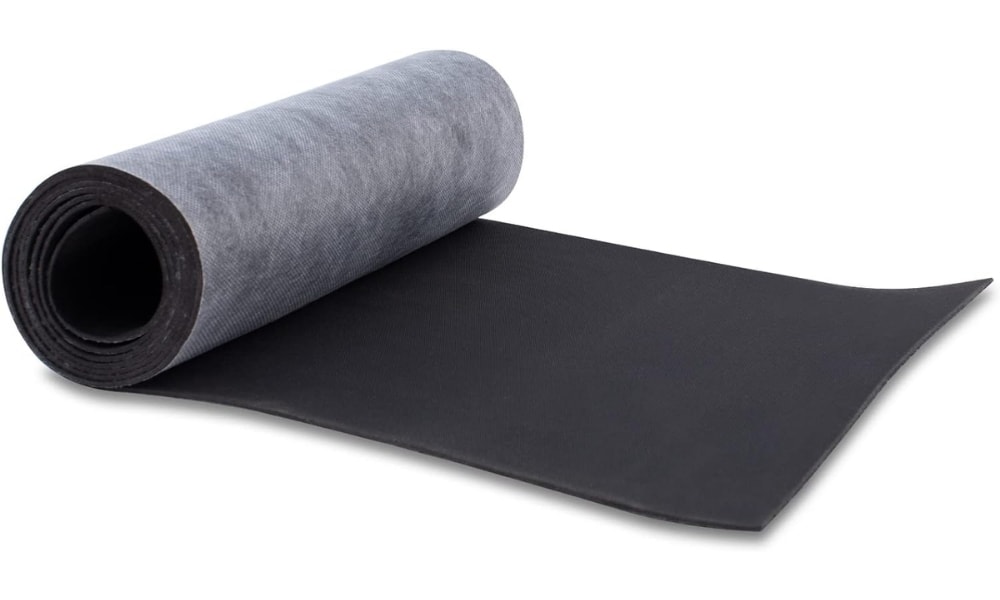
If you have hollow drywalls, add another layer of drywall or mass-loaded vinyl.
Mass-loaded vinyl is a heavy and dense material loaded with metal particles or minerals that increase the mass of your walls. With this elasticity and viscosity, it simply absorbs sound waves that are about to hit your wall.
However, this material is not the prettiest thing to hang on your walls. So, I would paint it if I had to install it outside my drywall. Or, you may add to the layers on your inner walls. You must remove your drywall and replace it with a new one.
Although it works well in absorbing sound, it’s still worth the effort when done with other soundproofing techniques, such as decoupling and insulating the inner wall.
Method 5 Seal your doors and windows.
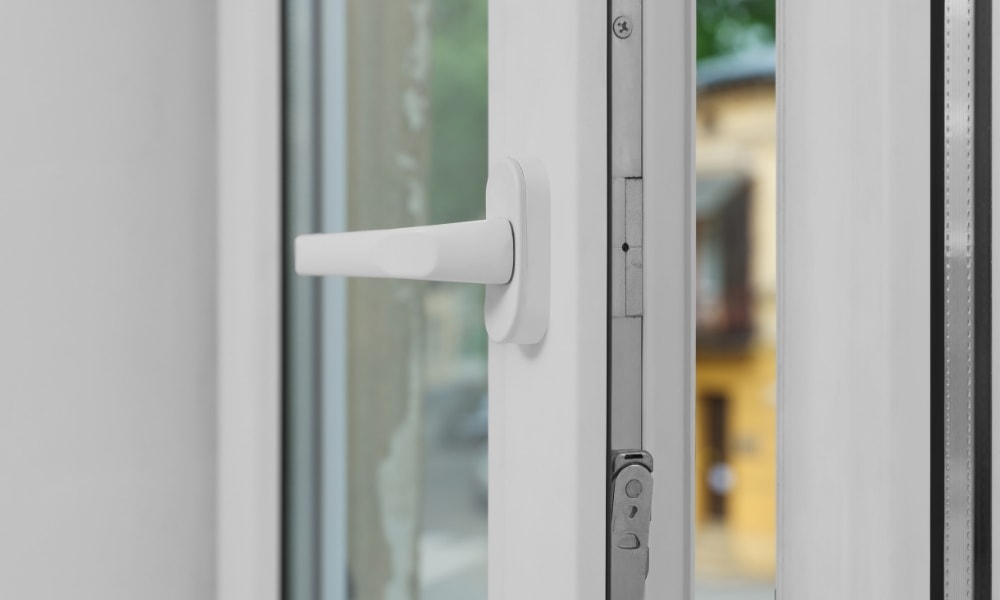
Now that you have dealt with your walls, you must also take care of the gaps in your doors and windows.
Even though the gaps seem small, you want to ensure the sounds are not leaking through these gaps. As, you want to ensure that these air leaks will not compromise all your soundproofing efforts.
Use a foam strip around the perimeter of the door.
Do you have any glass?
Go for double or triple-glaze windows. However, the glass may still leak air if not vacuum sealed. You can also use acoustic caulks to remove the gaps completely.
I recommend adding mass to the door as you have done to your walls. Aside from that, you may also use a draft stopper to seal the gaps in your doors.

Method 6 Install floor underlayment.
Now that you have dealt with almost everything, you may have to deal with floors. If you do not have rooms below the floor, you are done.
But if you have one, you must place a floor soundproofing underlayment between your subfloor and floor covering.
You will place a dense, thick, and durable material like rubber.
Using a foamed or shredded rubber is ideal, but make sure to install somthing about six millimeters thick to comply with building codes.
Aside from rubber, you can also use other materials to dampen or reduce the sounds. Use acoustic mats, mass-loaded vinyl, or a green glue compound.
Or, improve the sound or reduce vibration in the floor by using rugs or carpets, felt or double foam underlayment, or insulation materials between the subfloor top and floor joists.

The best approach to isolating sound from your home cinema
There’s no single best method to isolate those sounds generated from your AV equipment.
Effective soundproofing involves a multi-faceted approach because each home theater room is unique.
To take control of the sounds from your home cinema, your wall insulation must come with well-planned decoupling and acoustic techniques. There must be a sound integration of these techniques to make it more efficient.
Remember that we can always enjoy movies in full roar and blasts without disrupting our neighbors’ and housemates’ peace.
If you still have issues with your home theater installation, Mountyourbox will always become your place of help. From your TV or smart projector set up to your home audio system with a minimalist setup, we’re always here to guide you.
Have more questions in mind? Feel free to ask.