
Last Updated on April 20, 2026 by Johann Holsinger
Article summary
- Your setup will need a receiver if it’s composed of passive speakers.
- You don’t need a receiver for powered speakers.
- You will not need a receiver if you’re a casual viewer with no intention to upgrade.
- A receiver is not an amplifier. More on this below.
Here’s a straightforward answer.
You do not need a receiver if you casually watch TV with less than five speakers or video sources.
But if you plan to upgrade to a home theater, you may start investing as early as now.
If you have recently bought a new television and someone told you to get a receiver, hold it.
Check your preferences and plans for watching TV and listening to audio.
If you only have a television and a pair of speakers or a soundbar, there is no point in having a receiver.
The answer to your question depends on the complexity of your intended setup.
If you are looking for the best possible viewing and listening experience, a receiver can be a convenient way to centralize your audio and video sources and amplify power to independent speakers.
A receiver is a god-sent piece of equipment that eliminates the hassle of switching inputs into your TV as you can connect multiple sources at once.
If you are planning to upgrade your media room but are still unsure if you’re one of those people who need a receiver for TV entertainment, read on.

What is a receiver?
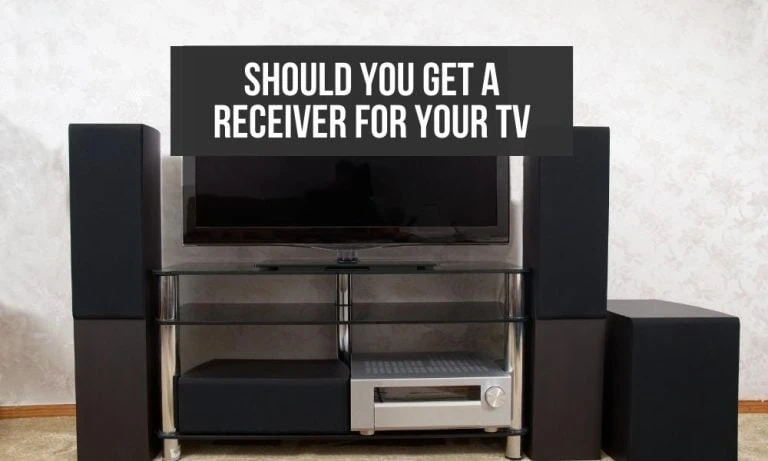
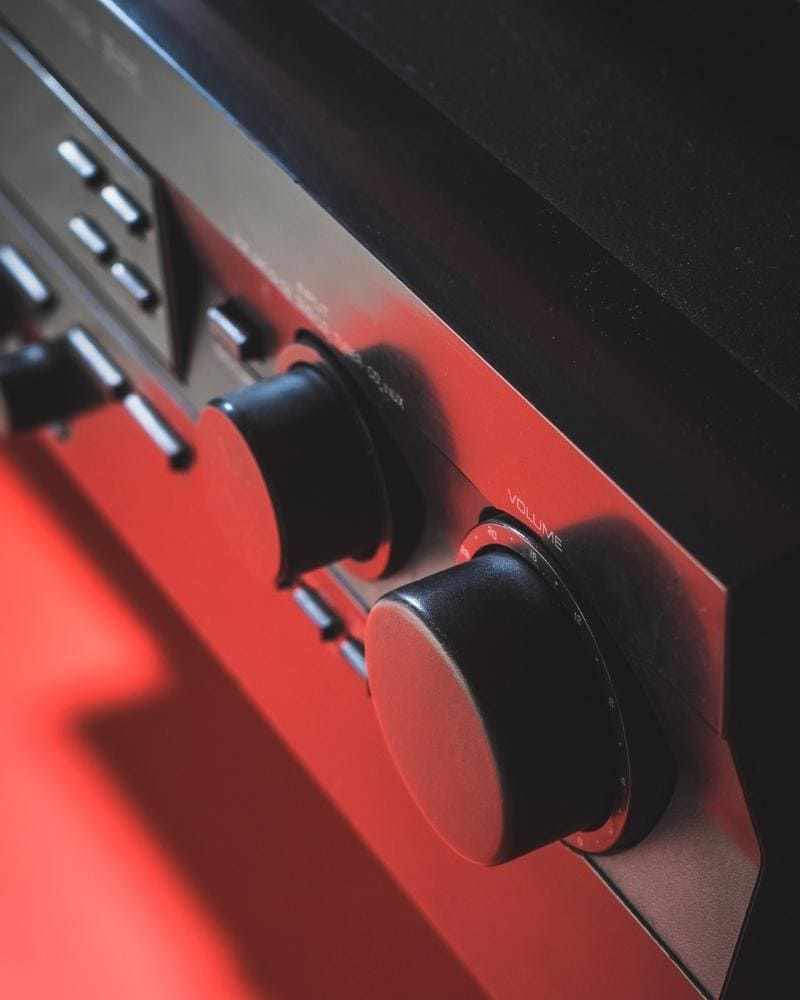
We are talking about this bulky box you find in the middle of console tables, or floor TV stands with shelves with many buttons and slots at the back for connecting different types of speakers. They are often mistaken for amplifiers, but they are not.
A receiver is an electronic component that receives signals from multiple audio and video sources, processes them, and distributes them to output devices such as TVs and speakers.
You often see it in complicated setups with multiple audio-visual inputs and outputs. And it serves as a central hub to control them.

What does a receiver do?
A receiver is a central hub that controls multiple audio-visual equipment connected to it.
- Amplify sound
- Connect HD and 4k videos to TV (depending on compatibility)
- Upscale videos
- Switch audios and videos
- Decode audio and video formats
- Distribute sounds to multiple speakers
- Smart features (for new models)
- Play audio in different rooms from different sources

Your current setup
Now that you know what a receiver does, you must understand that you can only use it if you have multiple audio-visual devices:
- Speakers
- Subwoofers
- Turntables
- CD-players
- Gaming consoles
- Streaming devices
- Media players
- Cable/ satellite boxes
- TV boxes
- Smartphones and tablets

After looking at this list, you probably realize which components you already have in your home entertainment system.
If you are looking forward to a simple entertainment system with one TV, a set top box, a media player, and a soundbar or right and left speakers, there is no need for a receiver.
Imagine if you add a receiver in this basic setup. You must turn the receiver on and set it to a media player or set top box.
Then, you must turn the TV on and set it to video input. You do not need this complexity when you only want to watch a thirty-minute to one-hour show.
If you have more than two video sources or more than five speakers, you need a receiver.
However, this is not the case if you own an all-in-one powered surround sound system.

Passive vs powered speakers
Powered speakers, also known as active speakers or active monitors, have built-in amplification features and power sources, eliminating the bulk and complexity of using a receiver.
In this setup, you can connect your audio to the power surround sound central control unit, usually a soundbar.
Most soundbars today have built-in amplification and work with wireless speakers and subwoofers. We also call this system a soundbar surround sound system.
Whether you use a smart TV or smartphone as your visual source, you can directly connect powered speakers to your device.

There are two ways to make it work. You connect your speakers to the monitor and then connect your television to the soundbar.
But for better audio quality, it’s better to connect the speakers and subwoofers on the soundbar first before connecting the soundbar to the TV.
So yes, with powered speakers, you do not need a receiver.
But for passive speakers or traditional speakers, you will need a central hub to receive, decode, and transmit audio data.
Passive speakers do not have built-in amplification. If there’s any benefit of having passive speakers, you have more room for upgrades and more space for larger drivers.
Bigger drivers produce sharper, crisper sound compared to the small drivers on powered speakers.
If you use passive or bookshelf speakers, this should not be a question because it requires a receiver.

Planning home theater upgrades
A receiver is a valuable central hub to your home theater system. If you plan to upgrade your entertainment system, get a receiver.
A soundbar surround system will already make a good basic setup but has limited customization capabilities. You may have limited options to expand your number of speakers.
Also, there will be limited inputs compared to a receiver. You need a more sophisticated soundbar surround system to support advanced audio formats.
However, if you prefer listening to music on the bed or near your desk while working or living in an apartment or dorm, a soundbar is enough compared to home theater speakers.
So yes. If you plan to upgrade your sound system without limitations, go for the receiver-passive speaker surround system.
If you are okay with the enhanced audio quality inside your room without needing more speakers or visual sources in the future, go for a power surround speaker setup.
When does a receiver become redundant?
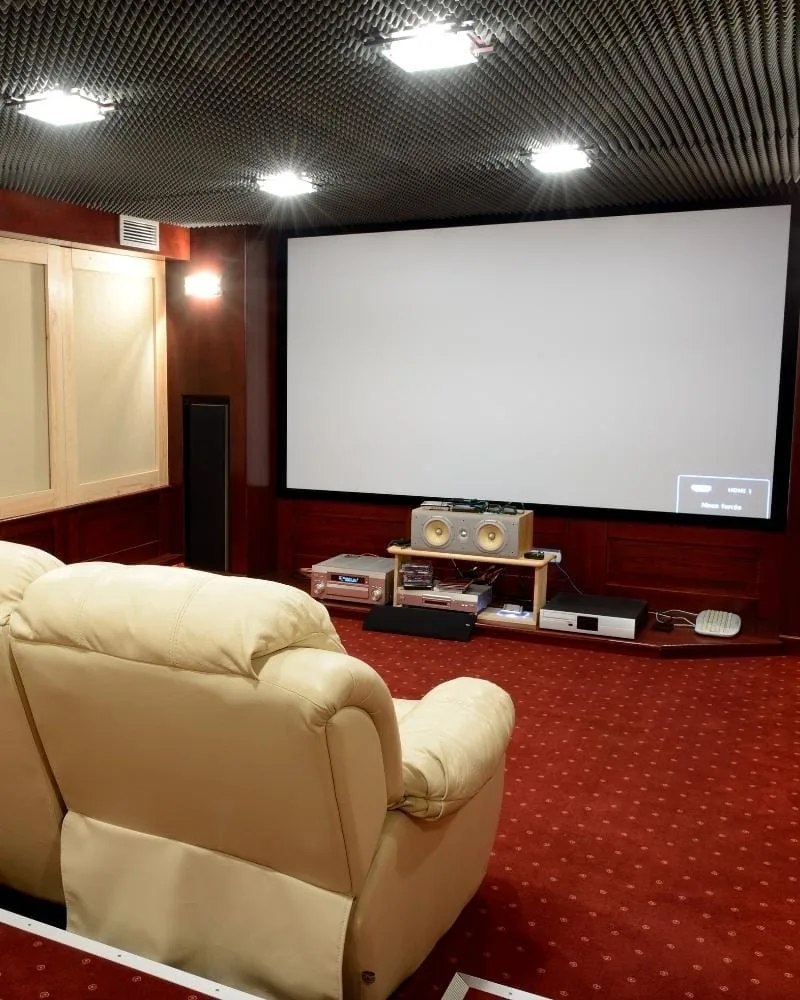
Some receivers today have built-in apps like Netflix or Pandora. These features are already present in your smart projector or TV. When there are too many features you will not need, a receiver becomes redundant.
If you want to enjoy movies and music alone or with your partner in the room, you do not to amplify the sound too much with multiple speakers and a receiver. A soundbar on the wall can do enough.
Seriously, you do not want the added cost if you can simplify your movie and music experience. If you have a pair of speakers, you could spend an additional $200 to $500 on other home improvement projects.
I, myself, love to save space and keep things tidy on my entertainment wall. I would rather get a flexible TV wall mount where I can attach another bracket for my soundbar.
These TV mounts retract to the wall when not in use and can be adjusted to different angles. Imagine the possibilities.
If you don’t have much space to give those high-end speakers and a bulky receiver box space, keep things minimal. You don’t need a receiver.
And if you do not like the hassle of setting up your television and a few video sources every time you watch television, receivers become overkill.