
Last Updated on April 17, 2026 by Johann Holsinger
Do you wonder how speakers work?
We all know what a speaker is. Chances are, you have more than a few speakers inside your home right now. We find these moving electrical components inside TVs, laptops, cell phones, headphones, alarm clocks, radios, and even some toilets! If something digital makes a relaxing or alarming kind of sound, there will be a speaker inside the device of course!
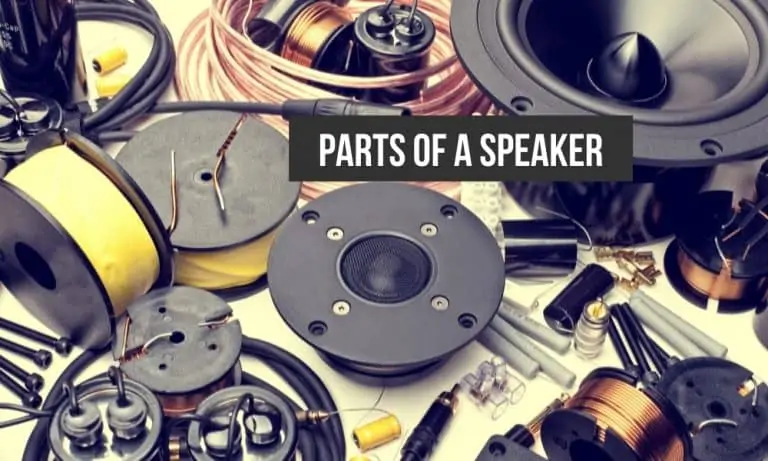
Knowing the basics of how a speaker works and; “what are the different parts of a speaker” can be beneficial for troubleshooting if something goes wrong. Knowing the potential trouble spots can help make fixing one much easier.
How does a speaker produce sound?
A little bit of science comes into play here when we did our research. When air pressure changes, sound waves are created. Depending on how fast or slow the air pressure changes will determine the pitch of the sound created.
When a speaker cone moves, the air is pushed at different speeds to create unique sound waves.
These waves adjust in length and frequency which changes the pitch and tone of the sound that our ears process.
Most humans can hear between 20 Hz and 20 kHz. This includes the quietest buzz of a gnat to the loudest roar of a jet engine.
Luckily, household speakers normally aren’t required to make sounds this extreme.

The different parts of a speaker
Speaker cone
The purpose of the cone is to move the air from a speaker.
The cone is one of the only moving parts inside a speaker, and the effectiveness is often dependent on size but a bigger cone does not always mean better, the manufacturing quality plays a large role, and nowadays there are some higher quality and louder speakers that are compact and portable.
The larger the cone, the more air is moved due to the larger surface area to push air and to make auditory vibrations.
Dust cap
Also called the diaphragm, the dust cap is designed to protect the internal working parts of a speaker.
Normally made from paper or felt, the cap material can also be made from, aluminum, rubber, or polypropylene.
The cap can also be one of the first or most common areas to get damaged on a speaker as this part is delicate and pliable if touched too aggressively.
Surround
The surrounding acts as the suspension system to support the vibrations caused by the cone.
This part of a speaker cone is normally made from foam or polyfoam, but can also be made from other materials too.
Additionally, the material may be in various shapes and thicknesses depending on the size of the cone your speaker has.
Check out our parts of a speaker diagram.

Voice coil
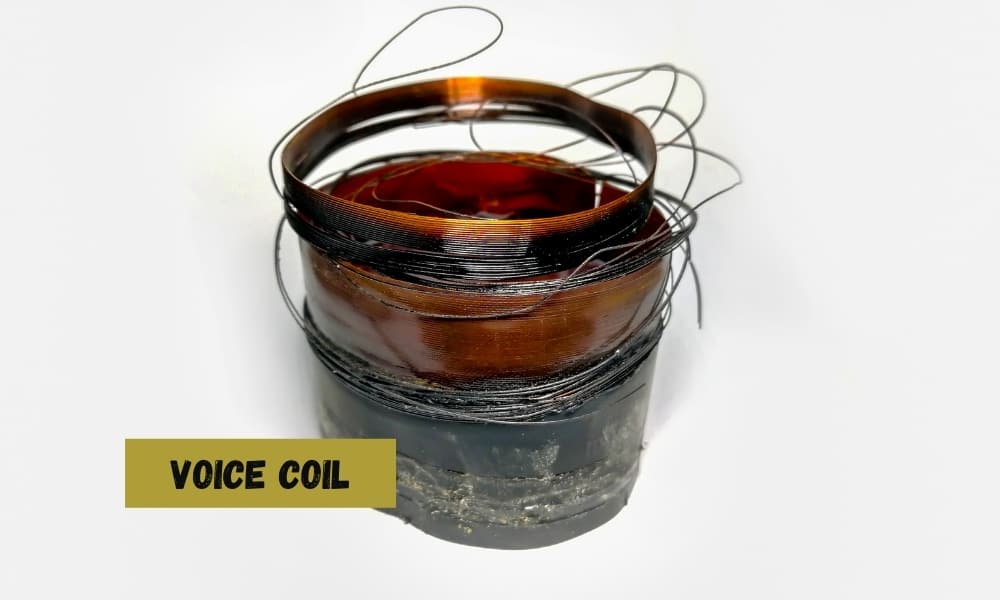
The voice coil is the component that makes the speaker cone move. This movement creates the sound you hear.
The voice coil works together with the magnet to create an alternating frequency field.
This field vibrates the cone which in turn can create sounds between 20 Hz and 20 kHz for the human ear to notice.
Spider
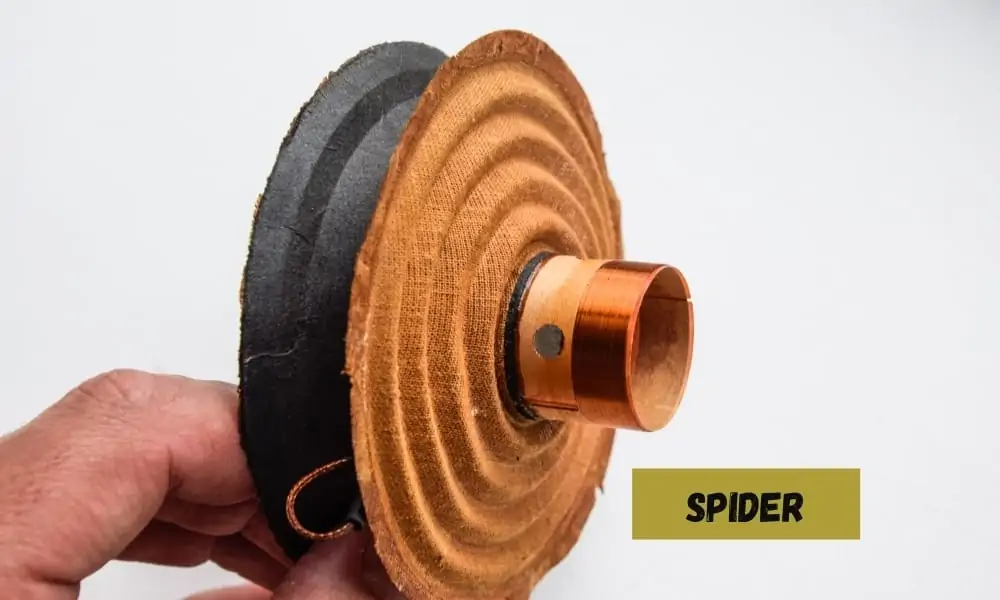
The spider works in tandem with the surround. Both of these components keep the voice coil properly aligned when it’s vibrating at different frequencies.
As the surround keeps the cone stabilized, the spider keeps the surround in the center position.
These three components together create a perfect combination of cause and effect.
Magnet
The magnet is exactly that; a neodymium rare earth magnet that creates the standard magnetic field. This magnetic field works with the voice coil to support each other in their movements [1].
The stronger the magnet, the better the push and pull of the magnetic field.
The greater the push and pull, the more the voice coil and cone can move to create beautiful sounds.
Basket
The purpose of the basket is to reduce the chances of sound distortions and to provide overall structural integrity to the internal speaker components.
It’s normally made from aluminum, but can also be made from plastic. It’s one of the most important internal pieces and if the material breaks, the entire speaker can fail.
Bottom plate
The bottom plate works together with the pole piece to provide a stable guiding rod for the magnetic field.
Without the bottom plate, the pole piece would not offer enough stability for the magnet to work against and the magnetic field would be misaligned.
This in turn would cause poor sound.

Pole piece
The purpose of the pole piece is to provide a direction for the magnetic field to point to and for the magnetic forces to penetrate.
A properly aligned magnetic field can maximize the range of frequencies a speaker can produce.
The pole normally sits directly below the voice coil and the speaker cone.
What is different about a subwoofer?
A subwoofer is considered a driver. Drivers inside speakers are specialist-type components, which means each part has a dedicated and specific type of job to do for you and your delicate ears [2].
The job of a subwoofer is to max out the lowest frequencies in a sound, such as the bass.
A good subwoofer doing his job will create a range of vibrations you can physically feel and enjoy deep through the bones in your backside.
Sounds should be able to be heard clearly by everyone nearby or even at a distance.

What is different about a marine speaker?
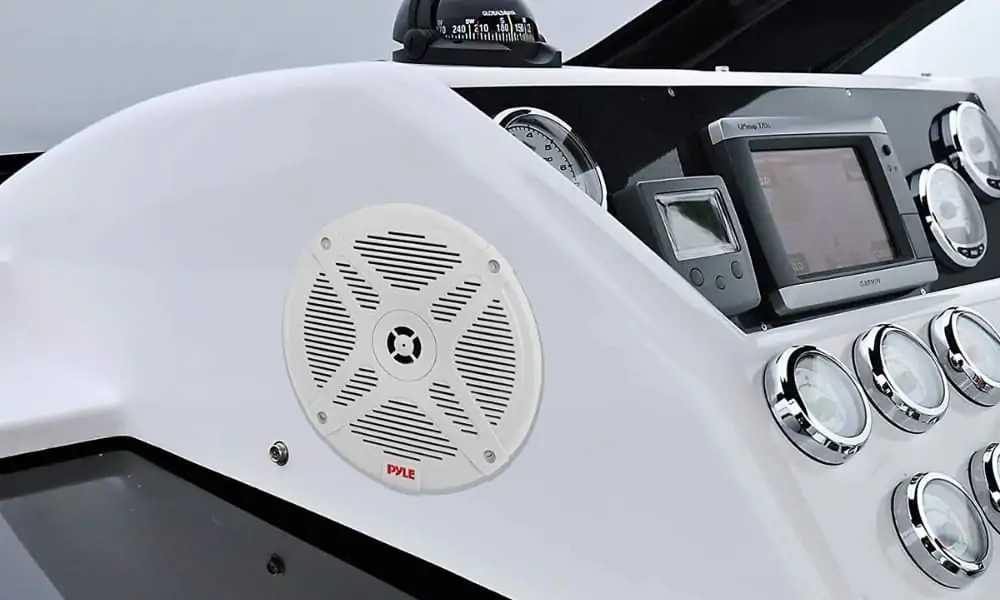
While marine speakers work the same way mechanically, the exterior of a marine speaker is different from the one you would find inside your house.
For example, the components overall are highly corrosion and moisture resistant.
The dust cap is also normally made from rubber instead of paper.
A marine speaker must be made to resist damage from moisture and external movements as it’s normally installed in a boat, outdoors, or in a sauna.
What if one of the parts is missing?
Once you have a basic understanding of the parts of a speaker system and how everything works together, troubleshooting potential issues become easier.
There are a variety of DIY kits you can find to help you perform the recone process on your own.
If you notice your speaker is not sounding as good as it once did, repairing is always an option and a good way to reuse and recycle old technology instead of throwing the entire speaker away.
Normally referred to as a “recone” this process is required for rare or vintage speakers as going out and buying a replacement is simply not possible.

Each part matters.
Speakers are often a piece of equipment we all take for massive granted. They’re so commonly found around our homes, in our vehicles, and even in our workplace and we rarely give much thought to the inner workings of these devices.
Imagine a world with no speakers! We would really go nuts!
However, a little bit of science and research can create the wonderful sounds you hear and enjoy from your speakers on a daily basis.
Having the knowledge of the basic parts of a speaker is not only interesting but can be vital for you if you are working with vintage speakers or subwoofers.
Should something go wrong with these units, you’ll have a better idea of the culprit and be able to replace the damaged component much easier.
More information:
- What’s a voice coil on a speaker? https://electronics.howstuffworks.com/voice-coil-speaker.htm
- Understanding how speaker drivers work, an article from https://www.dummies.com/consumer-electronics/home-theater/understanding-how-speaker-drivers-work/