
Last Updated on April 18, 2026 by Johann Holsinger
Bringing your home TV setup outside?
Ever since the pandemic began, people have been staying indoors more as a result and looking for productive ways to spend their time at home. We cannot deny that many homeowners tried their best to fulfill their delayed DIY projects during this time.
Home improvement projects start from living room renovations to kitchen projects to transferring leisure activities outdoors and this includes setting up a television outside.
If you’re a homeowner looking for ideas on how to place your home TV outside, you’ve come to the right place.
We don’t care how you have transformed your backyard into a comfortable spot for outdoor activities, fun, and gatherings.
Whether you have covered decks, screened-in porches, or a simple shaded deck, we’re here to help you set up your outdoor home entertainment system on a new level.
Let’s start with your TV.
Things to First Keep in Mind When Mounting TV Outside
When mounting a TV outdoors, you don’t just take a television and a mount and simply install it outdoors as you would under full shelter.
There are pointers you have to address before setting up. One reason is you cannot simply leave an electronic appliance outside your home because of the ever-changing weather and higher humidity levels.
However, this doesn’t mean you cannot push through with your outdoor TV mounting project.
You have to take precautions about the method you choose.
That is why you should prepare your checklist before starting your project.

1. Get an outdoor TV.
There is an appropriate television that can stand the challenges of being outdoors. An outdoor TV is rated for weather resistance, such as extreme temperatures, dust, moisture, and sunlight.
Also, an outdoor television comes with anti-glaring technology. They have an NIT count ranging from 1000 to 2000, while regular indoor televisions have about 250 to 300. This feature makes a difference when you are watching a show outdoors under the stars.
As specialty monitor types are exposed to more potential wear and tear, they have more durable construction than regular smart TVs and may or may not require an additional weather-resistant enclosure.

2. Select a TV mount for outdoor use.
Not all mounts can sustain the challenges of outdoor mounting and exposure to humidity and moisture, especially around the ocean.
Also, it is worth noting that specialty outdoor monitors weigh significantly heavier than indoor ones.
So when you buy a TV bracket, make sure to have your TV specifications ready such as size and load rating. Some mounts are intended for outdoor mounting.
Outdoor mounts usually have multiple layers of material coating for corrosion resistance and protection of moving parts that are prone to ceasing up otherwise.
And should have stainless steel hinges to resist corrosion on moving parts instead of a light zinc coating.
Here are the mounts that you can use for outdoor mounting.
- Full motion extendable mounts for walls such as brick walls or sidings
- Ceiling pole or motorized ceiling TV mounts
- Fixed or mobile TV stands
- Pop-up or drop-down TV mounts (From a waterproof enclosure).

3. Every outdoor space could take a TV outdoors.
If you are still in the planning stage of building a living space outdoors. We’ve got awesome ideas for where you can place your outdoor home entertainment space.
Under an outdoor kitchen awning
If there’s any place outdoors where you can best gather to watch and share good thoughts and happy memories while cooking and grilling, that would be under the outdoor kitchen awning.
The canopy can help protect electronic appliances stored outdoors and includes your television.
When your outdoor kitchen has a reliable structure, you can have numerous ways to mount it.
First, you can use your wall or the awning post to mount your TV. For an outdoor kitchen, In a dry area, I recommend using a motorized ceiling mount.
You will have convenient options to control your viewing angles remotely. But if you are eyeing the corner, there’s a dedicated Tmount for the corner.
However, if the area doesn’t have solid walls, go for a single-studded articulating TV mount on a post.

On a shaded wall
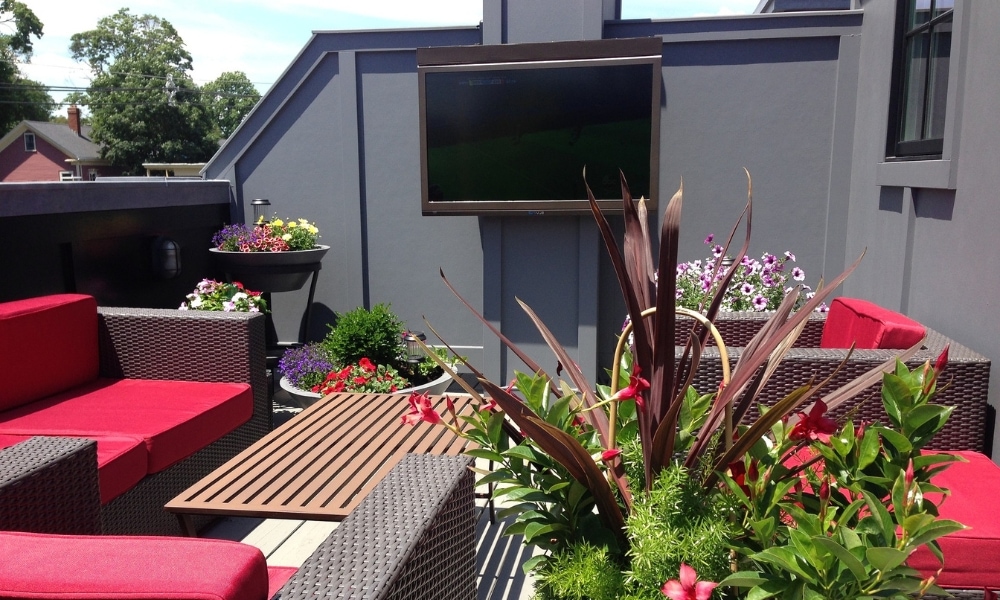
A shaded exterior wall is one of the most common mounting options outdoors. You only need a few fixtures set up on a deck or patio, and you can mount your television directly on the wall.
Depending on the height and arrangement of your seating, you can install your TV using an extendable or fixed TV mount. An extendable TV mount lets you adjust for different viewing heights.
Mounting your TV on a shaded wall is not different from indoor TV mounting. You only need to add some protection for your TV aside from the sun.

On the outdoor sunroom wall
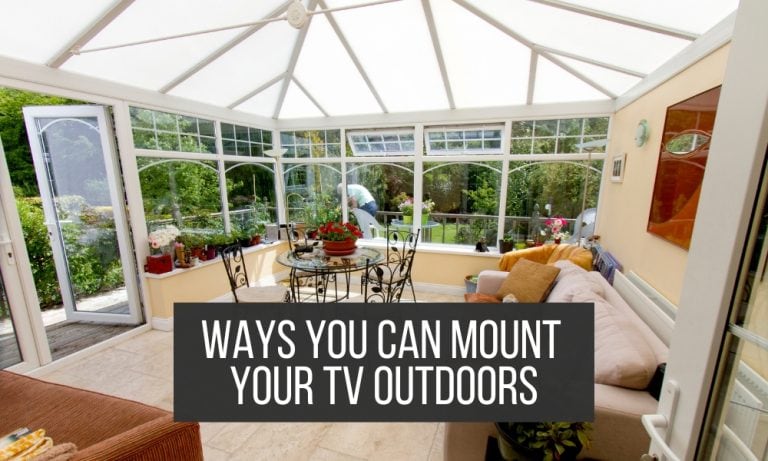
An outdoor sunroom is another great place to mount your TV. While not exactly an outdoor living space, it provides a roomy at-home feeling with a fresher view of surroundings and nature.
Since this place has more windows than walls and the place looks like just any other room but with a better view, you have many ways to mount your TV.
You can mount your monitor on your brick wall from the house building, and not on the dwelling.
But if your seating faces the glass windows or wall, the ceiling soffit could be a great option. Use a motorized TV mount since you can operate it remotely, and adjusting the angles can be handy.
However, with the majestic outdoor view and seating arrangement, I highly recommend customizing a pop-up cabinet to hide and store your television. Build and customize an outdoor TV cabinet and use a TV lift mechanism to attach your monitor.

Under patio covers
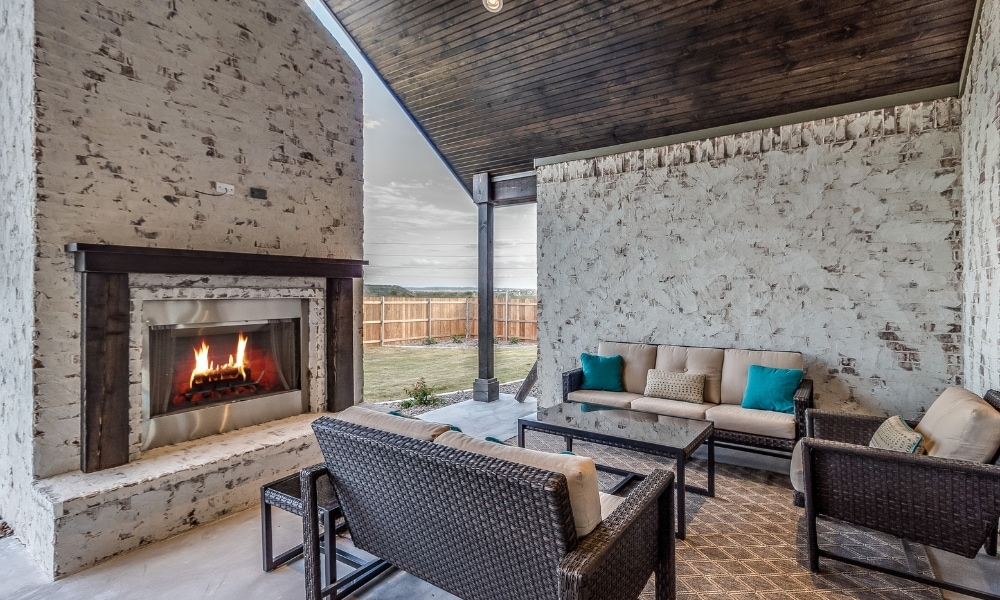
A covered patio is one of the best places to accommodate your guests and gather your family.
The covered outdoor space contains some shade that can protect the TV from sunrays, dust, and other elements. Also, it helps reduce reflections and glare.
For the covered patio, your ideal mounting placement is a recessed extending TV support inside an enclosure. The brick wall makes a pleasing backdrop for televisions outdoors.
Or, if you don’t want to drill holes into your walls, you can opt for a ceiling TV mount and use the ceiling joists for sturdier support.
If you want to place your one in the corner, I’d recommend using a single-stud articulating mount that will hold onto the posts.

On a covered deck
Just like the patio covers, a covered deck also provides ultimate protection for your TV from different elements such as rain, snow, and sunlight.
Also, a covered deck provides a scenic view outdoors while watching.
For covered decks, you will need a solid beam or joist for the mount to hold on to. For added security and stability, add more blocking or bracing. Doing this will help provide better support for the television.
If you don’t want to hang your TV at elevated heights, you can affix a television stand on the floor.
This mounting type works well if you opt for the minimalistic look as it takes less floor space than cabinets or console tables. TV stands have adjustable height and extra shelves for media players.
If you want a stand that you can move around, I would go for rolling TV stands.
Some homeowners would use TV carts, but they are bulky to move around. Again, it all boils down to your preference.
Here’s one more tip if you’re mounting your television on a covered deck.
Keep your TV away from direct sunlight. Covered decks are more exposed to the sun than full indoor ones as decks may only have a roof to cover the top.

On a screened-in porch
One thing I love about a screened-in porch is that they limit the amount of sunlight getting in. An entrance with a screened porch adds more curb appeal to your home.
And yes, even if most parts are screened, you can still place a TV on your porch. Most porches today have sections for walls to accommodate one.
Homeowners prefer having stoned or brick walls a lot of the time. Building a fireplace on your porch will require compliance with building codes.
But it won’t restrict you from doing so you can still place your monitor above the mantel of an outdoor fireplace. There’s an adjustable pull-down fireplace mount that you can use for it, and you can even use an indoor flat screen on your porch if it is well-covered.
Here’s another tip: you can provide added protection for your television with a TV cover if you are mounting it on your screened-in porch.
4. Surfaces to mount your TV outside
To summarize, here are the most reliable placements for outdoor TV mounting:
- On a brick wall
- On sidings
- On a stucco wall
- On corner posts
- On ceiling beams or joists
- On a recessed wall with TV enclosures

5. Mind where the sun and TV are facing.
You can have your ideal exterior walls for your TV, but it won’t work if it faces direct sunlight. When picking an exterior wall, avoid the south-facing walls because it takes more heat from the sun [1].
Doing this will help you view your screen better when outdoors.
Even if you own an outdoor TV, positioning makes a lot of difference when watching outdoors. This procedure goes well if you have an outdoor living space with huge windows or an outdoor view.

6. Temporarily move your TV outdoors.
If you don’t regularly watch television outside, but you want to use the same equipment you can manually move your inside TV outside temporarily for a movie.
What helps is a specialty RV TV mount that can be used on the outside of your home just like on the outside of an RV wall. One type of RV mount can have multiple hooking spots, put one hook inside and one on an outside wall.
You can lift your television off the mount inside and place it outside when you want to watch television outdoors.
You won’t have to build a waterproof shelter if you only watch TV on a good day, and then return your television inside when finished.
You can do the same with a rolling stand to move your television outdoors and then back inside again at the end of a movie.

7. Manage the cables.
If you have a sturdy wall in your living space outdoors, I would highly recommend placing your TV in enclosures.
This measure protects not only your TV but also the electronic components, wires, and cables for all the electronic appliances you use outdoors.
You can install an in-wall cabling kit and keep your wires tidy.
Protect your wiring in an outdoor living space as much as possible because it could be a safety hazard if water finds a way to intrude on the terminals.
Here’s how you can manage your wires outdoors:
- Use cable ties, clips, or clamps.
- Use cable organizers.
- Find cables designed for outdoor use.
- Use wireless technology as much as you can.
- Use shorter cables or wires as much as possible.
- Use waterproof enclosures for connections.
8. Plan the speaker placement.
When installing a television outdoors, you do not only look for the most reliable and sturdy location to hang your TV.
Also, consider the positioning of your speakers. You cannot rely on the built-in speakers of your TV. They produce low-quality sounds that can be unheard of even if you are right in front of the television, especially outside.
For an outdoor TV, you’ll need at least two dedicated speakers for a more audible sound. But if you have enough budget, go for an outdoor surround sound kit.
When placing your TV, plan where these speakers will go since your TV would be placed at the center of the speakers.
We advise purchasing wireless speakers for outdoor monitors. Aside from being able to control it remotely, you would not have to bother managing speaker cables.

Tips for Protecting your TV and TV mount outdoors
- Place your television in a shaded area.
- Avoid installing a monitor in windy areas that can blow water.
- Purchase a protective cover for your TV.
- Check the weather-proof rating of the television and its mount.
- Use weather-proof sealants for your TV mount.
- Protect your cable, wires, and electronics.
- Use a cable management kit or organizers.
- Use surge protectors for a sudden spike in electricity.
- Make sure to install your TV mount securely and stably.
- Move your television inside in the event of a wild storm or hurricane.
Conclusion
With technology advancing at a fast pace today, everything is possible. Electronic devices can now withstand the challenges of changing weather and some elements of climate change.
However, it doesn’t mean you have to expose your TV outdoors to everything. We should still make an effort to protect devices from more than the manufacturer’s limits.
Today, we can take our leisure time outdoors and have fun with our family while enjoying the natural air and view outdoors. It is not impossible to take your television outside and not feel at home outdoors. All it takes is careful planning and an appropriate TV mount for your dream outdoor television.
More information:
- How to block the sun from hitting the wall an article from https://homeguides.sfgate.com/block-sun-hitting-house-23183.html