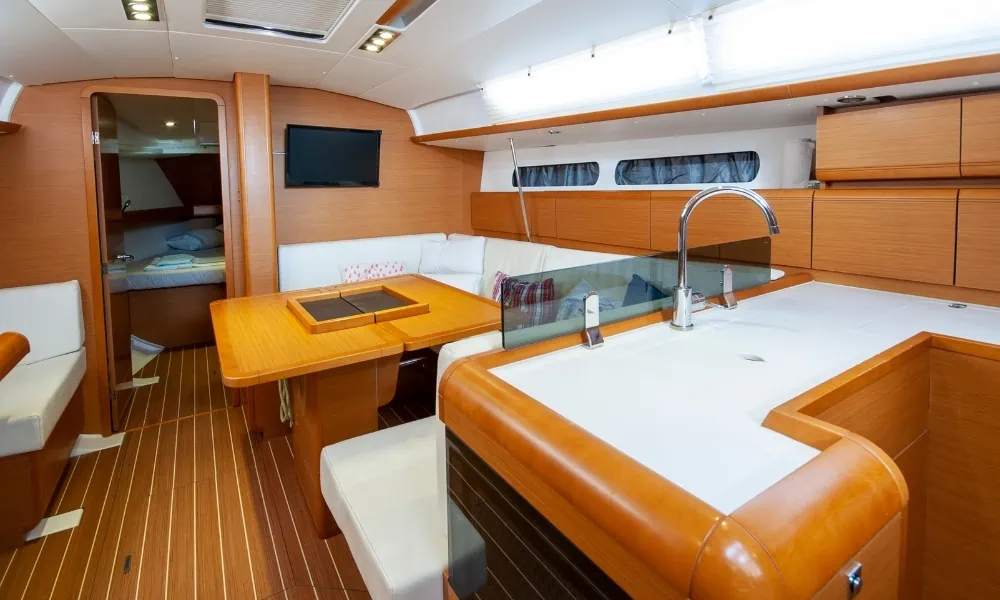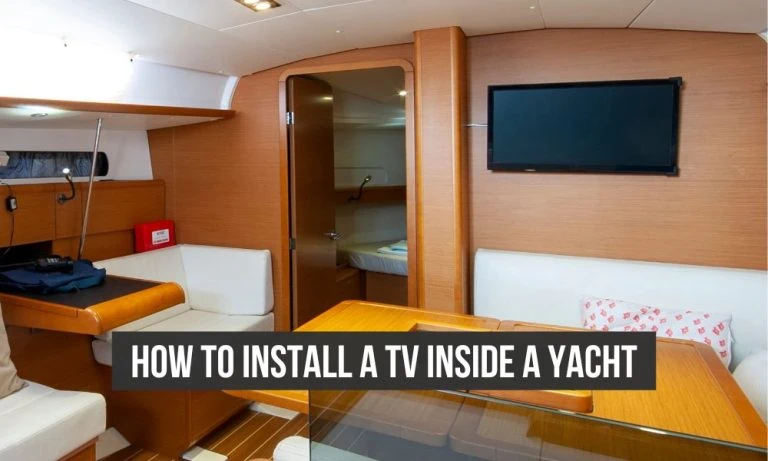
- Want a TV inside your yacht?
- Things to consider when mounting on a boat wall
- Step 1 – Purchase a TV mount.
- Step 2 – Choose a mounting location.
- Step 3 – Prepare the tools you need.
- Step 4 – Attach the TV to the mounting plates.
- Step 5 – Attach the TV mount to the boat wall.
- Step 6 – Attach the TV assembly to the bracket on the wall.
- Now that you’re all set

Last Updated on April 19, 2026 by Johann Holsinger
Want a TV inside your yacht?
Nothing is more comfortable than having access to your favorite TV shows when cruising the sea like a free man.
With all the upgrades available, you can do it in your pleasure boat with a wide flat-screen TV.
A television inside a yacht is truly a refresher when you can turn it on and off in the middle of the water anytime you want.
But how do you install a TV inside the yacht? This can depend on many considerations. While it sounds as simple as hanging a monitor on the wall, it is much different from mounting a TV on a home wall.
In this guide, we’ll share how you can safely install your TV inside a yacht or – on your yacht wall.
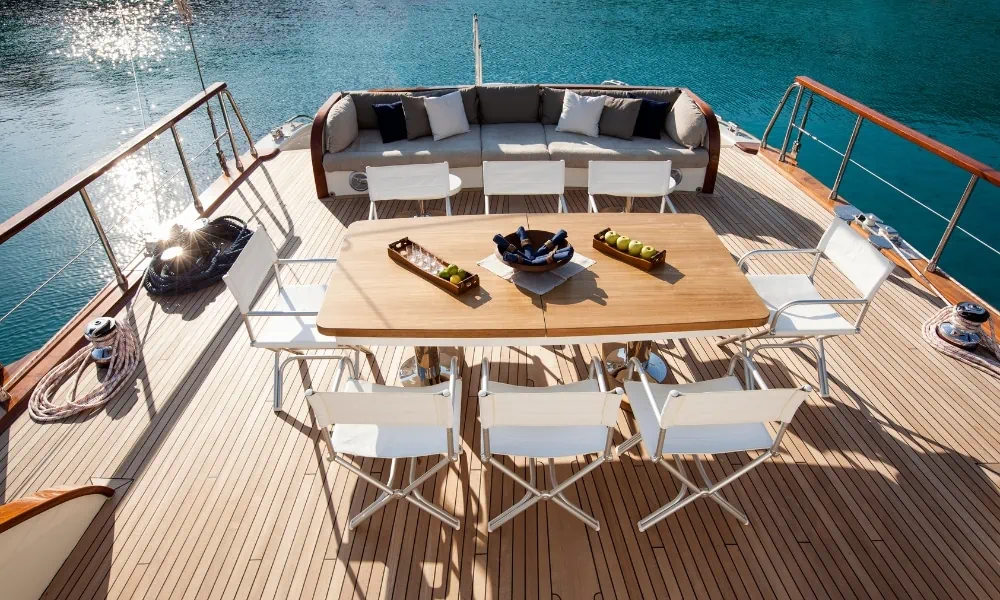
Things to consider when mounting on a boat wall
Before we teach you how to install the TV inside a boat, there are just a few things you have to take note of.
See, a yacht is unlike a place at home where you can mount your TV in a stable location.
You would have many more options but not as many as how you can mount it at home!
So before mounting your TV in the yacht, plan a few little things before purchasing a television or a mount as a standard mount may not be suitable for inside a boat.
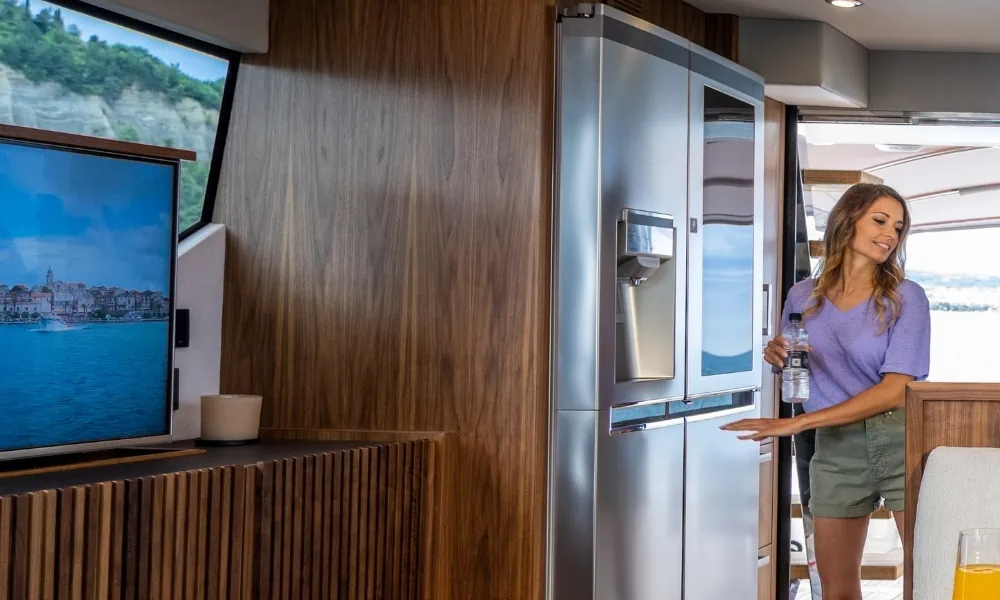
1. Stability
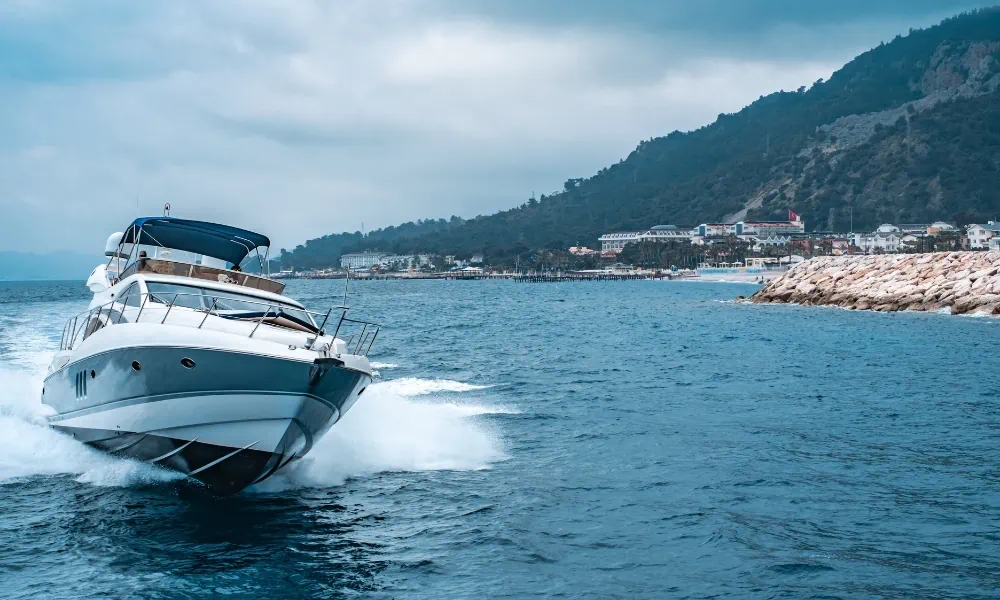
A yacht or any boat is unstable when cruising or even when docked.
With the constant movement of waves and wind flowing, placing a television inside a boat must be taken with extra caution. For this reason, most TV brackets used at home may be unsafe on a yacht.
You can choose outdoor TVs and TV mounts rated for shocks and vibrations.
The electronics on an outdoor flat screens can withstand the test of environmental challenges, like movements and vibrations. Also, anti-tip straps or locking mechanisms can keep your TV secured in place.
For example, RV TV mounts are built with a locking mechanism designed to stop TVs from falling in a bumpy environment!
2. Space & TV size
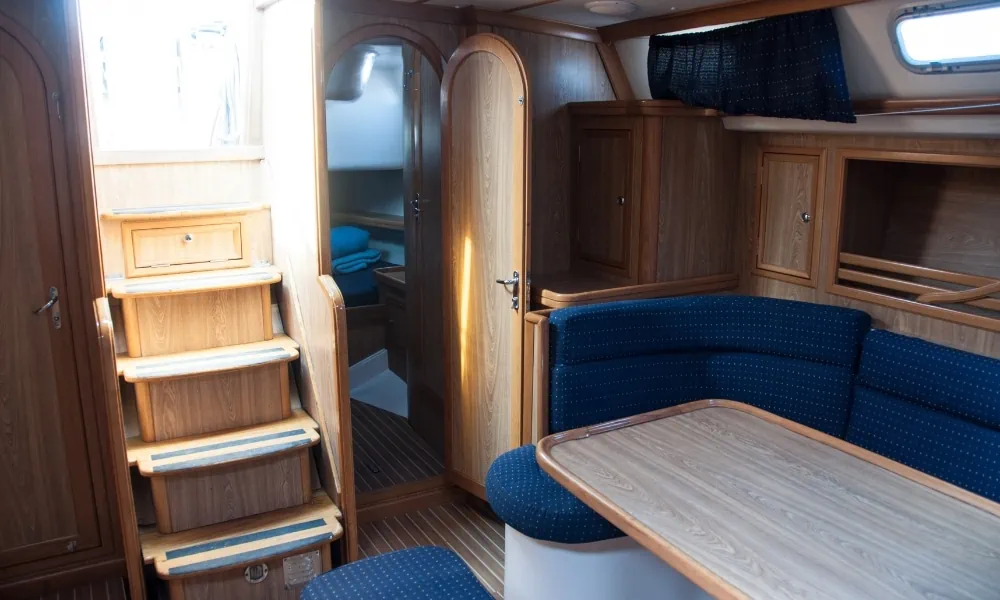
Depending on your cruiser, you may have limited space to add a flat-screen TV. Whether you mount it on your stateroom or saloon, pick a spot that can accommodate your chosen TV size.
Most yacht owners or boat dwellers would put their TVs on the reinforced bulkhead, a partition that divides the interior to strengthen the structure and create compartments.
If you are choosing this space, check if the TV size can accommodate the TV mount.
3. Power & connectivity
Yachts & boats have established electrical systems inside the walls. The reason most owners place their TVs on the bulkhead is that you can find needed power outlets for TV there.
Additionally, you can avail of a satellite service on your yacht or a Wi-Fi system in your boat in the same area.
This way, you can stay connected with the outside world even if you are sailing remotely at sea.
4. Environment
Installing a TV on a boat or yacht also means your TV has to deal with the harsh conditions of the sea.
Saltwater exposure to the air can harm electronic components like connectors, cables, and any appliances and devices that use electricity. Saltwater can cause corrosion on unprotected metal components.
Additionally, your television will also be exposed to other elements such as humidity, temperature fluctuations, rough weather conditions, movement, and vibrations.
For this reason, you need to get a TV rated for outdoor or marine use with an up-and-down motion locking mechanism.

Step 1 – Purchase a TV mount.
A TV mount is an excellent way to mount your flat screen on a yacht and save space. There are different options to mount your TV, but the best way is to place it on your wall or in an enclosure with a bolt-down TV cabinet stand.
Some owners have told me how they built a custom TV cabinet where you can hide the TV and release it using a TV lift.
You can also use a flip-down mount. These mounts hang, fold, and flip down when not in use. Or you can use a locking mount that secures the TV in place – like those used in RV campers.
RV TV brackets are extra specially rated for shocks and vibrations. If your TV is less than 55 inches, you can use this mounting bracket.
Step 2 – Choose a mounting location.
You must dedicate time to choosing the right location on the yacht. Here are the crucial things to consider when finding your ideal mounting spot.
- Your wall. There should be enough space to accommodate your TV.
- The fixing point. You need to find good support for the TV mount. Make sure you will mount it on a wall with reliable support. Typically, the stud spacing on a yacht is 16 to 24 inches. Some mounts have a dual or single-stud mounting mechanism.
- Cabling management. Place your TV mount on a nearby outlet. Yachts mostly have 12V power in place. All you need is to organize your cabling. Make sure you have a 12V or 24V TV unless you have AC power inside your boat.
- Viewing access. Depending on your sailboat size, there could be limited space that would restrict your viewing angle from a fixed mount. Heighten your TV according to different viewing angles in your seating area, and consider an extendable wall mount or a ceiling fold-down mount that can be rotated or tilted via a remote control.
- Satellite or Connection. Don’t forget about your connectivity. Make sure your TV connects with your satellite dish on the spot you choose.
- Support. Find a fixing point that can support the weight of your TV.
Step 3 – Prepare the tools you need.
You will need a few tools to mount your TV.
Get your toolbox and take your drill, stud finder, level, marker, drill bits, and screwdriver.
Step 4 – Attach the TV to the mounting plates.
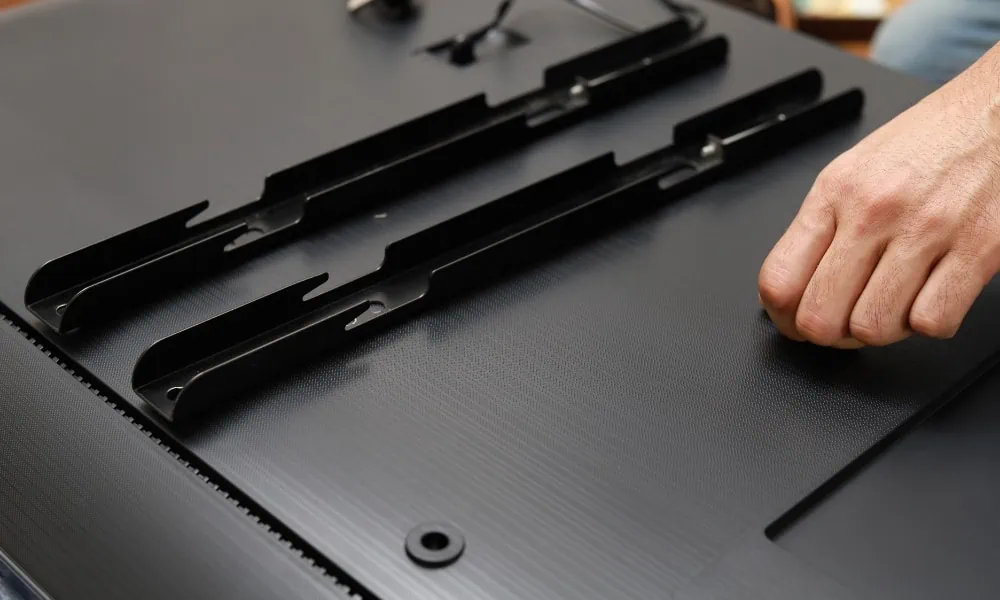
Lay your TV on a clean flat surface with a cloth to protect the screen.
Locate the holes at the back of your TV.
These holes should have uniform patterns compliant with VESA, so one set of holes on the mounting plate would fit together with the TV holes.
When you find a good fit, fasten the screws or bolts with the washers included in the kit.
Step 5 – Attach the TV mount to the boat wall.
First, prepare your wall by determining the location. Use a stud finder if you’ll mount the LCD on the wall.
If you place the screen on the reinforced bulkhead, you can go straight, leveling and marking the holes.
Some TV mounts have templates included in the kit, which should save time marking the holes to be drilled.
Attach the correct drill bit size to your drill and test. Start drilling the holes. From there, you can now attach the base of the TV mount to the surface. Now secure with fasteners.

Step 6 – Attach the TV assembly to the bracket on the wall.
When you have affixed the mount base to the wall, it is now time to attach the monitor to the bracket.
Fasten securely until you feel the mounting plate locked in place. Test if the assembly holds well.
You can connect other cables for your antenna or internet or media players once the flat screen is secure.

Now that you’re all set
Although mounting a TV on a yacht can be complicated initially, you can pull it off with proper planning.
It only takes a careful selection of your TV and the bracket you will be installing, plus added techniques to make it work.
If you’re looking for a more secure alternative, you can also custom-build a TV cabinet with a pop-up TV lift.
Just promise me two things, pick me up on your way through, and don’t drill any holes through the hull of your boat.